

Trash Goblin is a cosy shopkeeping simulator from London-based devs Spilt Milk Studios, the team behind Tango Fiesta (which was a fun-but-flawed shooter) and Powerwash Simulator (a reasoanbly well-received job sim effort).
As with the latter, this game sees you playing in a job role as the titular Goblin (that’s your actual name) as you take responsibility for a hole-in-the-wall shop for its own Aimon, an antiques dealer with a chequered past.
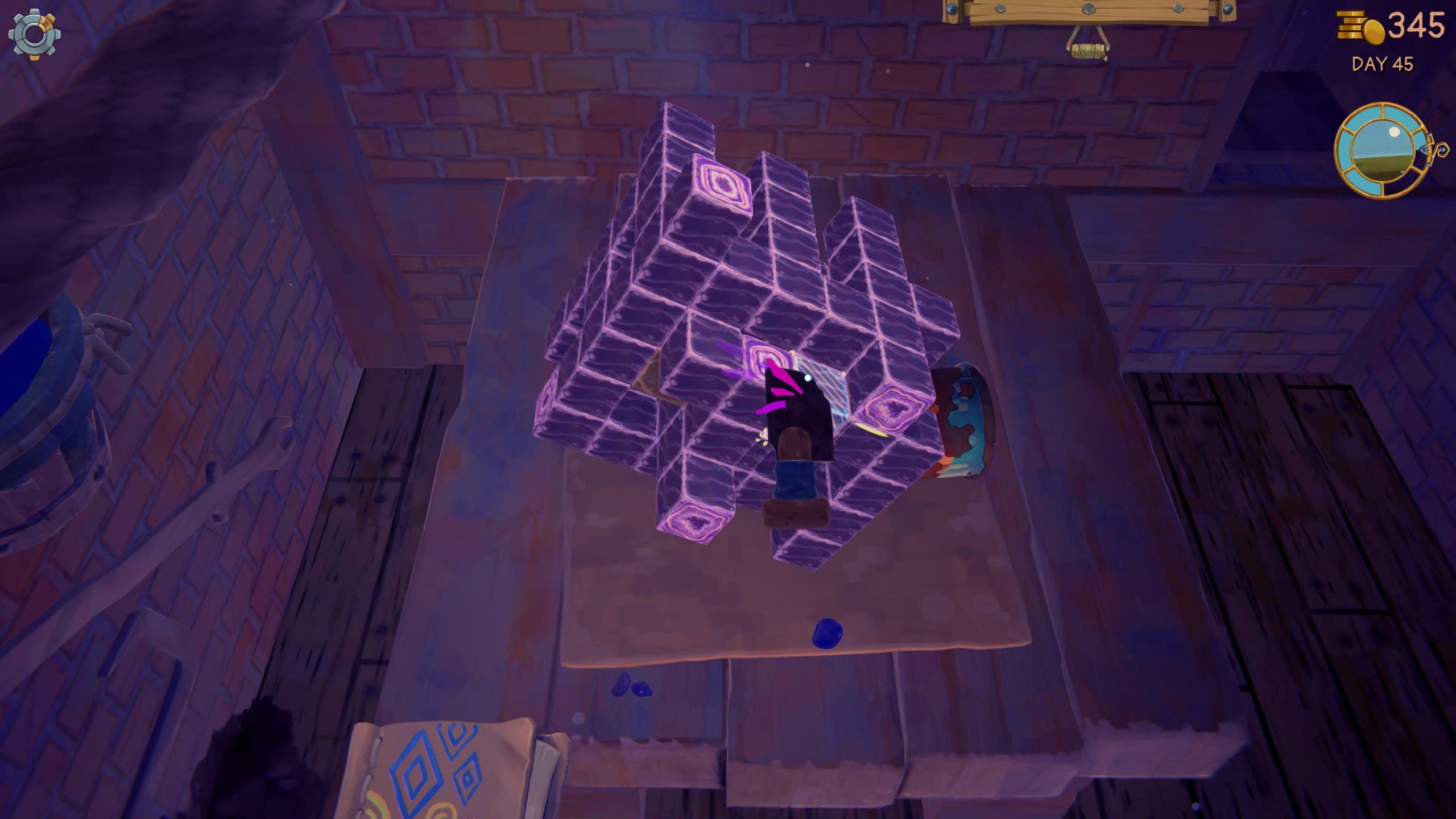
The shop essentially has four areas to it, and this is where the bulk of the gameplay happens and while it might seem like a lot to take in initially, the learning curve was a lot quicker than we expected.
The main area is the workshop. Here you’ll receive packages which you’ll break open with your chisel. Initially, these show up as collections of blocks, kind of like something out of Minecraft. However, your chisel can take off all of these rough edges (there are different types of blocks that take more or fewer hits), and eventually you’ll be left with an item that is almost ready to sell.
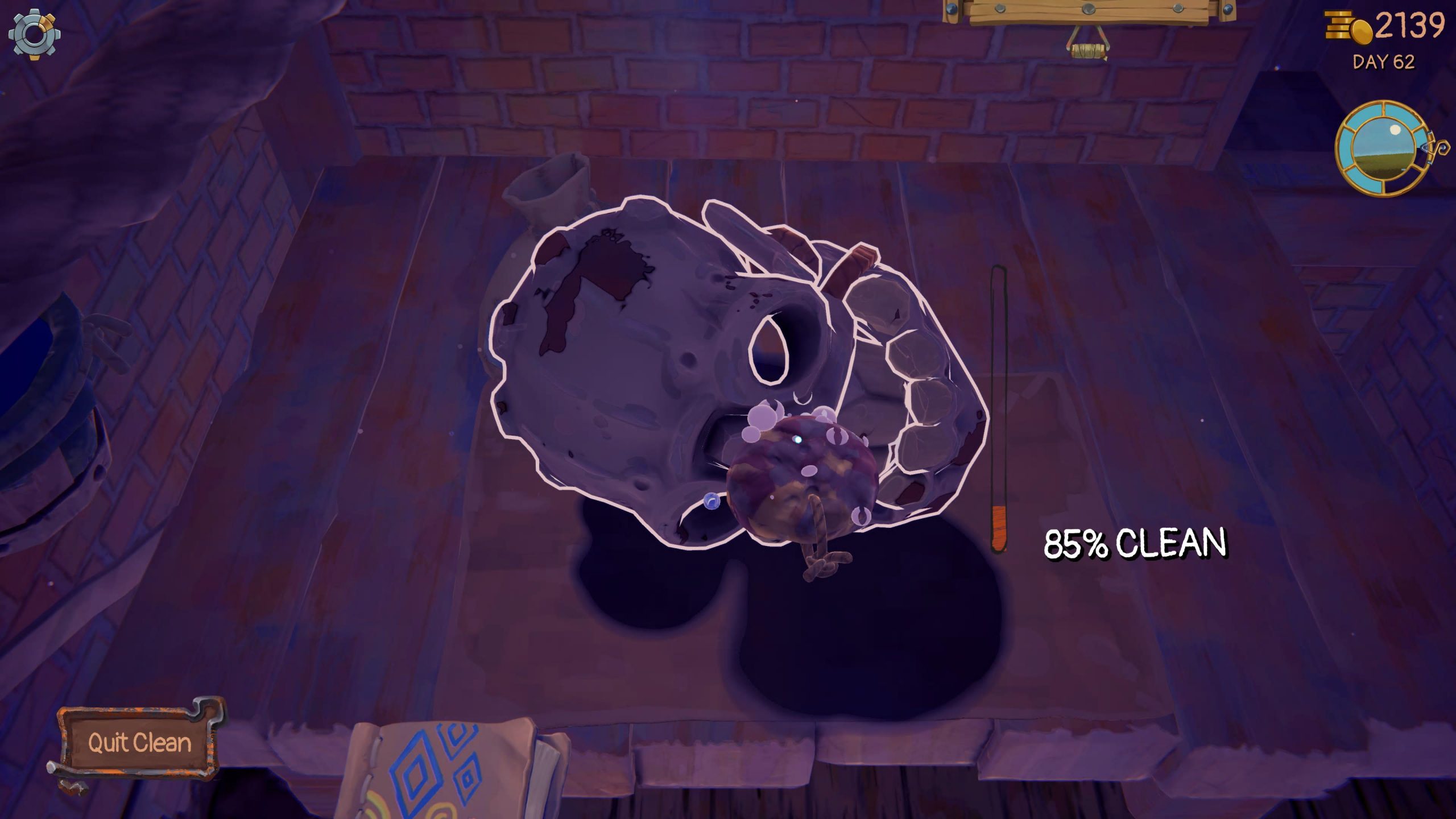 Your next tool is a sponge, which is used to clean the dirt off the item. The left stick rotates the item (as if it were in your inventory in a Resident Evil game), and the right stick moves your cursor (and therefore the sponge). Move the sponge over every bit of dirt, and you’ll now have a clean item.
The last tool allows you to upcycle items by combining them. Some of these are straightforward. If you’ve got a beer stein, a beer stein lid and a beer stein handle, you’ll figure out what you need to do. But often, completely unrelated items can also be combined to make some pretty odd curios.
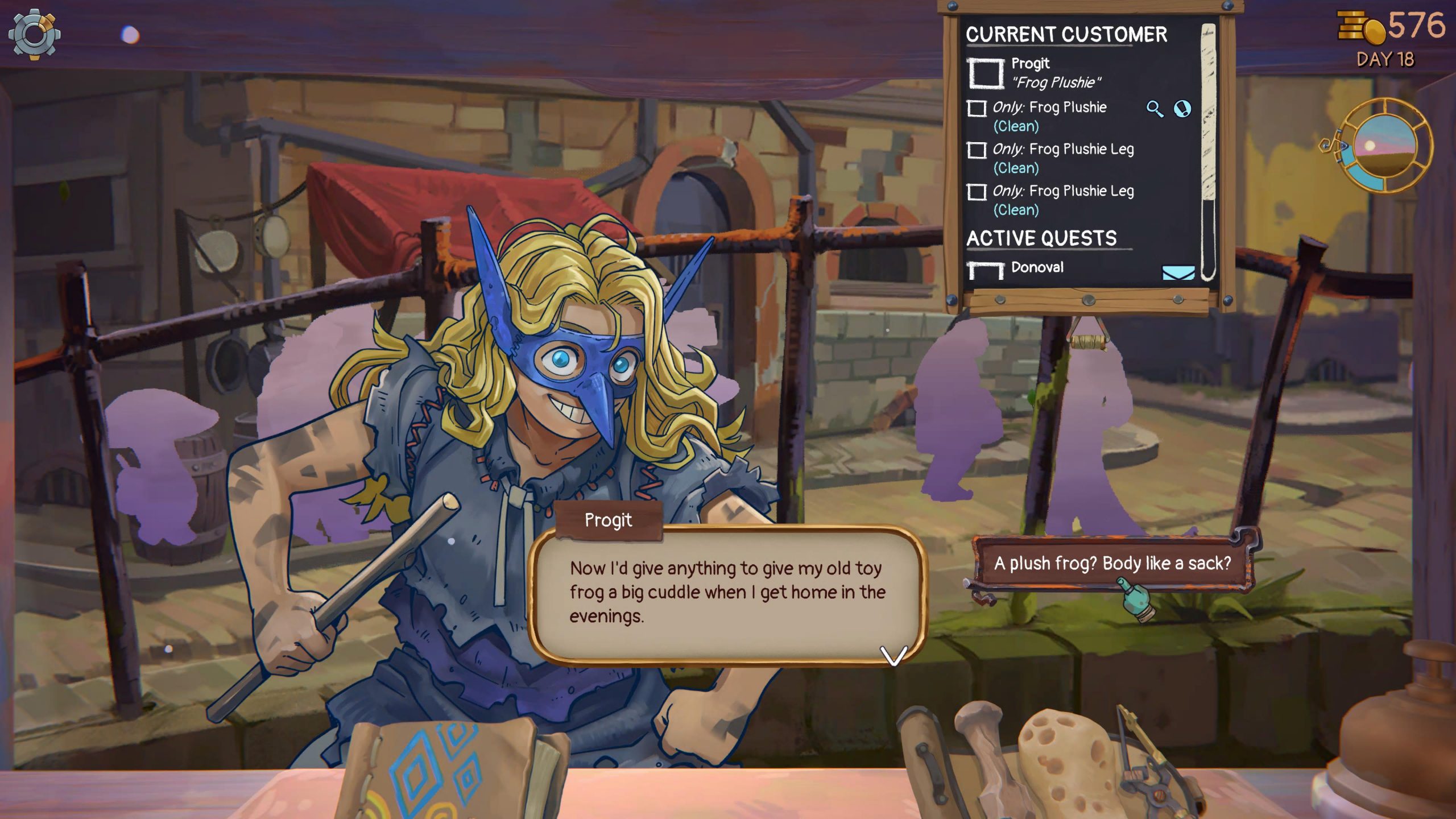 Once you’ve got some items ready to sell, the next most important screen is the shop window. Here you’ll get customers appearing with requests. If you’ve got the item they want, you can sell it immediately. Otherwise, you can decline them or, more importantly, ask them to come back later while you source what you want. That can be by either hoping the item they need shows up (which costs you nothing but isn’t guaranteed) or by ordering it for a price (and therefore a cut of your profit).
Later on, with the right customisation to the shop, you can also place items on a display mat, which will attract customers too. This is a good way to clear your inventory and raise more money, but we did encounter a very annoying bug here. Apparently, one item we put on the mat had disappeared but was still technically there. So every other customer that came along was trying to buy it, but we were unable to pick it up to sell it. That was a shame as it really interrupted the flow for us. There’s something about keeping things organised that we liked, so having an invisible errant item there was very annoying.
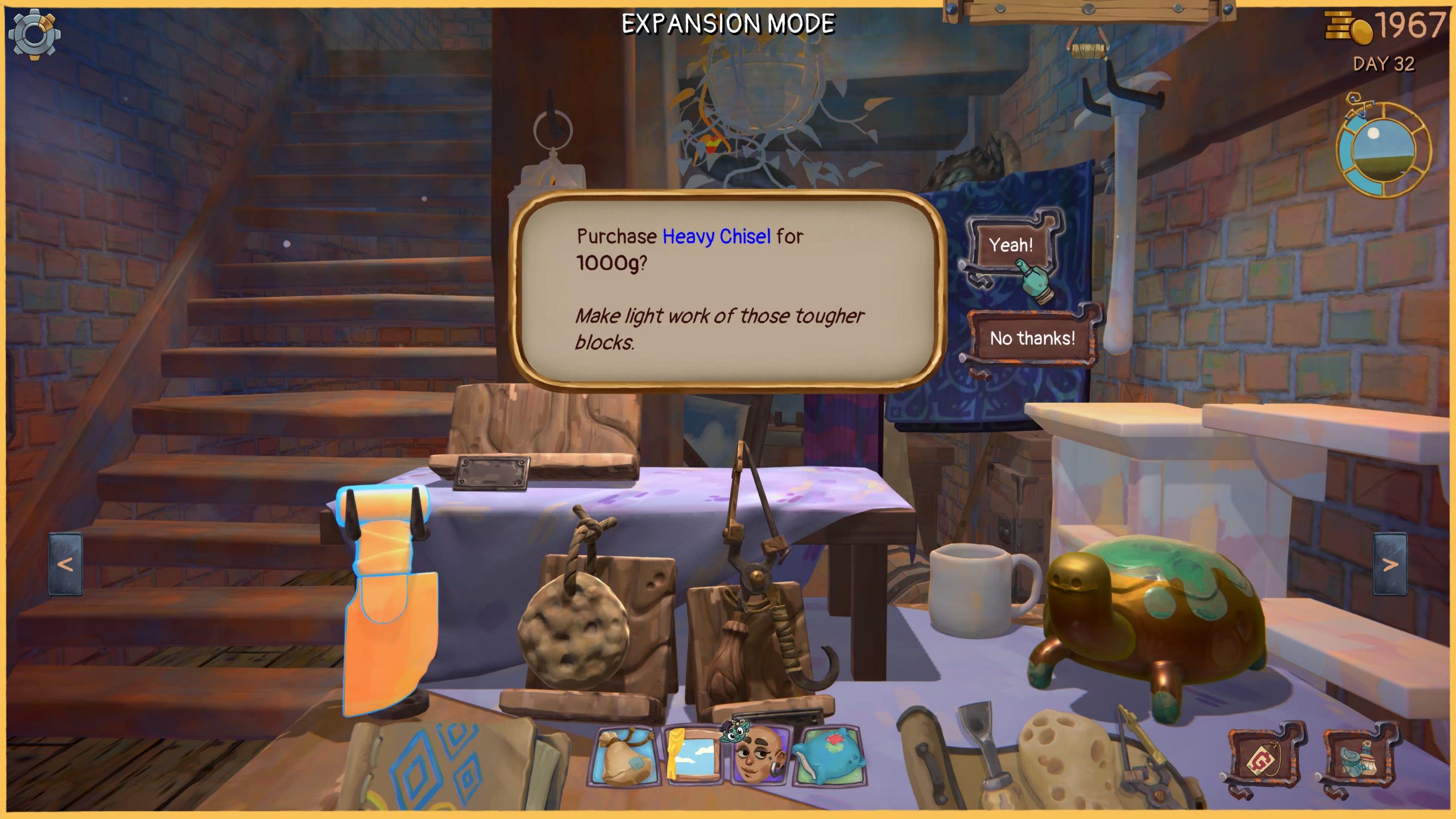 The third area of the shop is the back office. This is where you’ll find Aimon, who will occasionally set story quests or sell you upgraded tools. You can get a more efficient chisel, sponge and upcycler here, and they do help. The upcycler in particular is good because it allows you to combine more items together, which lets you make complete items such as toy plushies which have a body, head and four limbs (you’ll need to upgrade the upcycler five times to make that) or just put unwanted parts on other items to up their selling price.
The final area is your bedroom. You can only perform a limited number of actions each day when it comes to workshop activities before needing to sleep, so you’ll be heading here regularly. Although you can brew up some coffee (for a price) to get more workshop time.
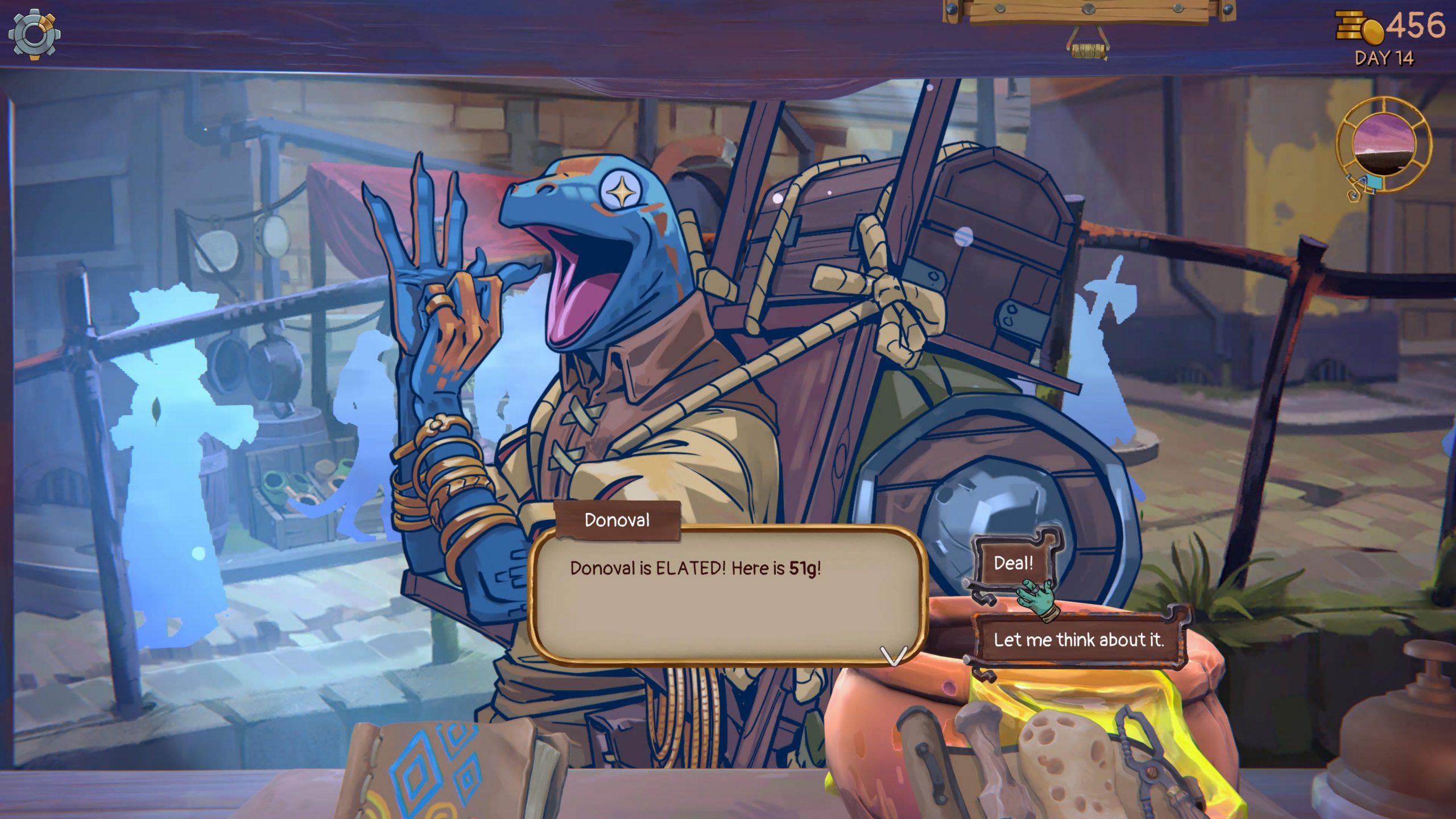 And so that’s the game loop for the most part. Occasionally, you’ll need to travel to a market, which is essentially just another shop window where customers seem to instinctively know what items you’re carrying. It’s another good way to clear out your inventory and make money.
For a while, this was fairly enjoyable. Certainly a game you can play while listening to a podcast or something (the quaint music gets old fairly quickly and there’s no voice acting). But after several days, I suddenly, and very dramatically, had enough. You see, there’s really not much of a game here. There’s no skill required, no puzzle-solving. There’s no real drama to it. It’s just a game where you do a task over and over in order to raise money to allow you to do that task a little more efficiently. Money can only be spent on better tools, more storage or some fairly bland customisations to your environment.
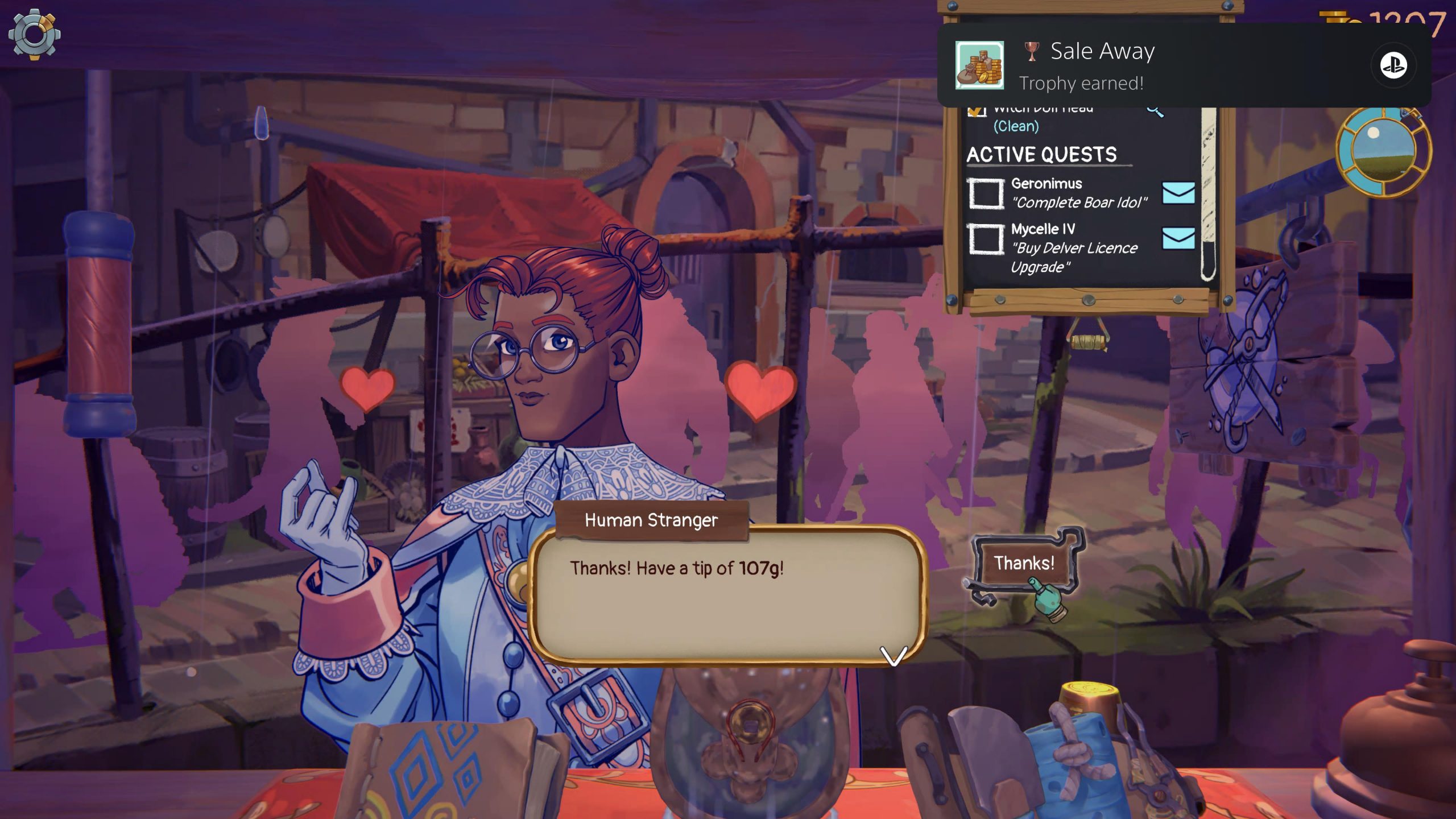 It’s busywork basically. We’re not sure when busywork became an acceptable substitute for gameplay, but we can’t really support it. I don’t really want to work in a shop. I don’t want to powerwash a tractor, mow a lawn, put out fires or run a farm. But genuinely, after several long shifts in Trash Goblin’s shop, I genuinely, suddenly had a moment of stark reality and said ‘fuck this’ and uninstalled the game. I’m not even trying to do a bit here. I just felt as though life is too short for this sort of thing.
The clunky controls, mediocre visuals and uninteresting plot didn’t help. Nor did that aforementioned bug. But it’s not that. It’s not even a Trash Goblin problem. It’s that games like this shouldn’t really have become a thing. Back in the ‘80s, when we had arcades, you generally had games that required skill and practise to do well at, and the games themselves had to be engaging and exciting. It was like an arms race where one game would come out and set such a high bar that you’d start seeing new games trying to top it. More fun, more excitement. Now imagine, amongst R-Type, Outrun, Rolling Thunder, Metal Slug and whatever else, you see a game called Tea Shop where all you do is serve tea to frogs or whatever. That game would be covered in dust. And yes, we’re aware that Tapper exists, but that was a game of skill. If games back then had all been job simulators, I’d never have been a gamer. I’d be able to speak Italian or some shit now.
Look, if you want a cosy game where you don’t have to think much. This’ll do the job. But honestly, man, your life is more precious than that. The weather’s getting nicer. Go and have a walk. Get yourself something nice to eat. I don’t know. Man, I just don’t know.
+ Simple enough game loop
- Clunky controls
- Unrewarding gameplay
u okay hun?
Tea Shop is coming to all consoles next month as it happens. Except it’s teddy bears, not frogs.