

Drop Duchy is a strategy game with puzzle and deckbuilding elements, and it comes to us from Sleepy Mill Studio, a French coding crew. And it’s really quite a strange mix of genres that really come together in quite a clever way.
The initial onboarding process with Drop Duchy isn’t too bad. You are put on a path with various events and branches, and you need to work your way up to the boss. Each step of the way will see you choosing between harvesting resources, battling enemies and developing buildings. There’s a bit of a balance between combat and resource gathering that you’ll need to feel your way through, though, and this is at the heart of most of the decisions you’ll be making in the game.
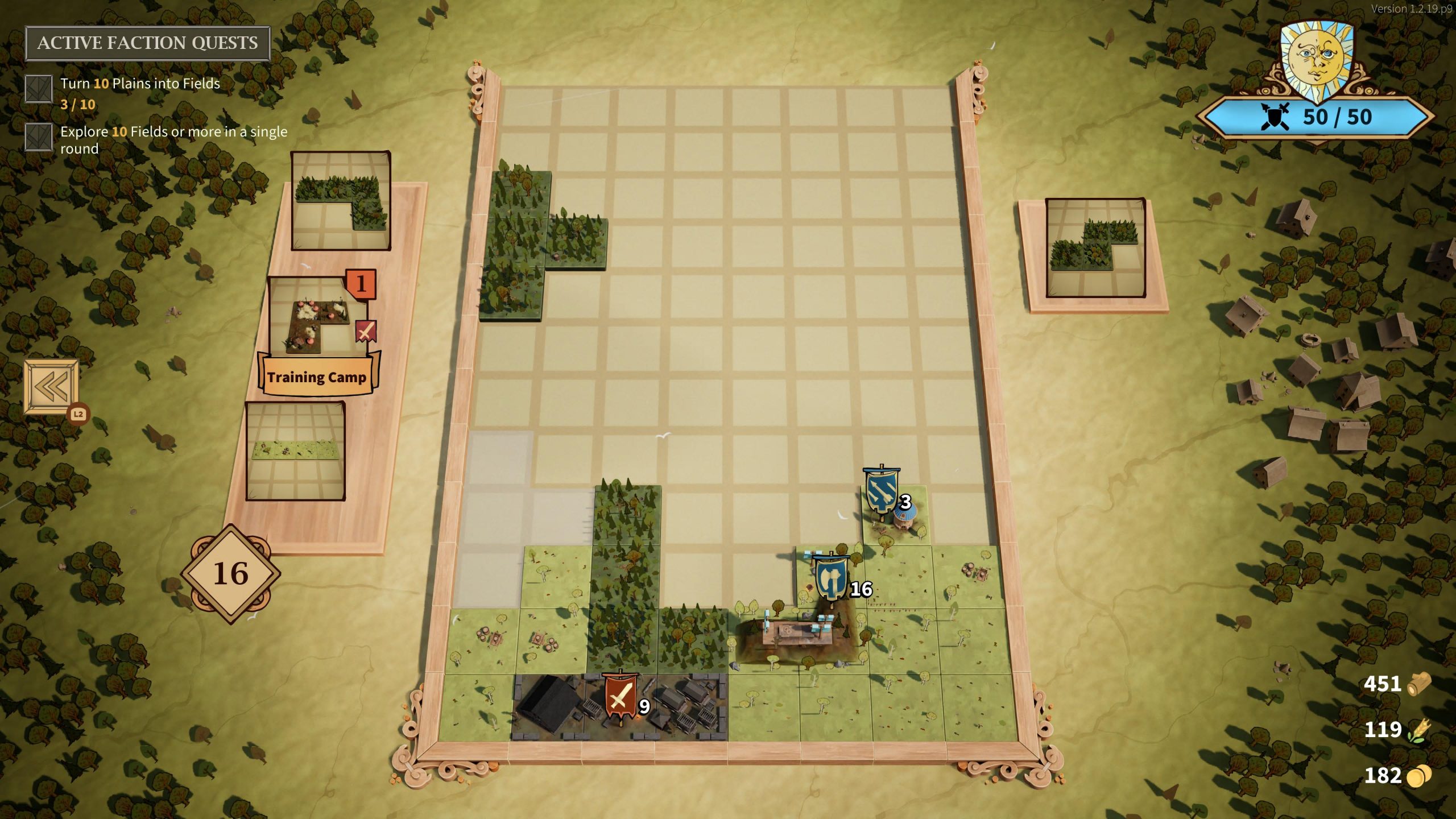 For the most part, that decision plays out on the main gameplay screen. You’ll often be offered a choice between battling enemies or going to enemy-free areas to get those resources, but this will give the boss more hit points. Once you’ve made that choice, you’ll be taken to an excursion.
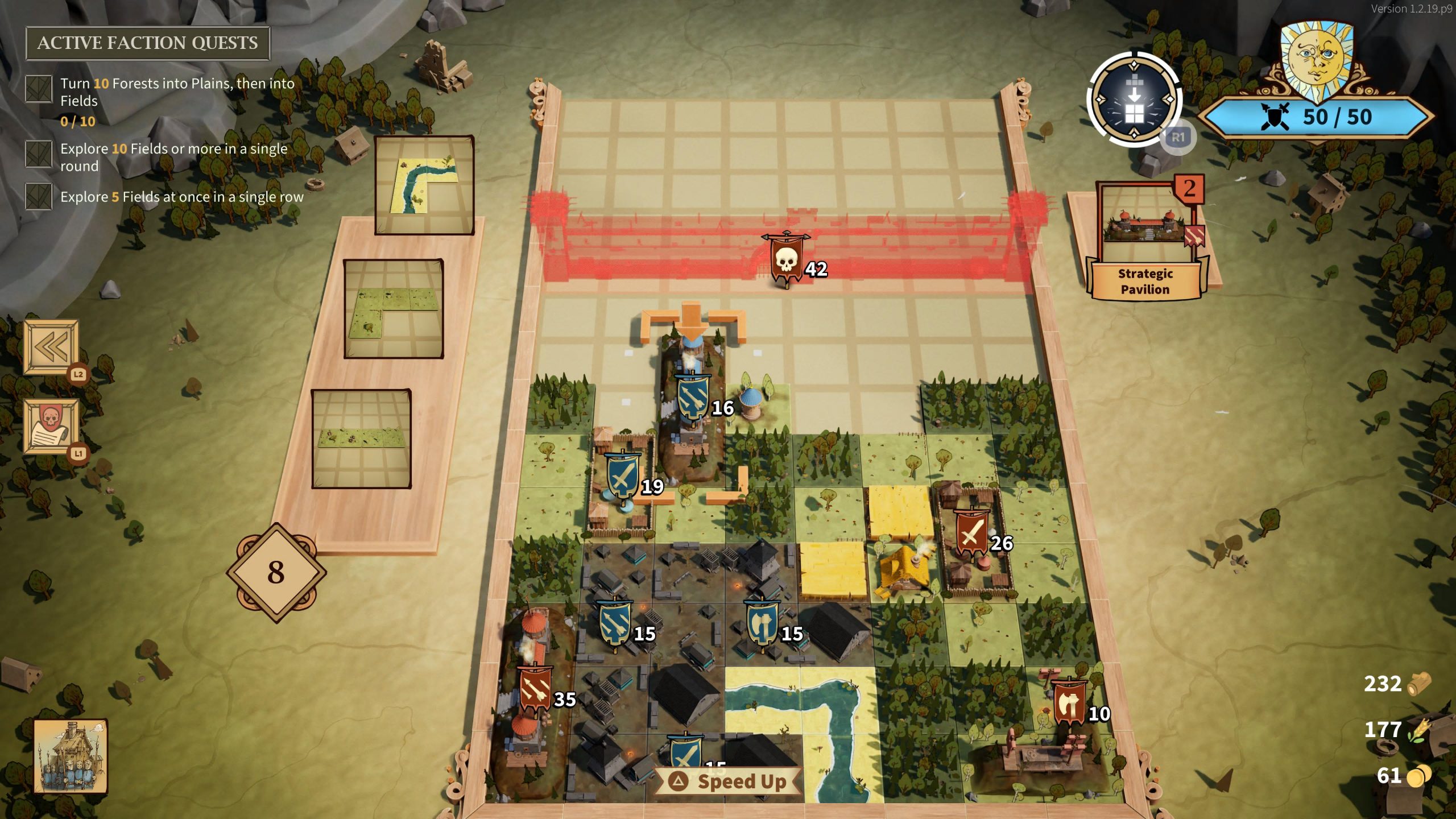
These play out like games of Tetris. Pieces in the usual tetromino shapes fall from above and you need to rotate and place them, just as you do in Tetris. However, you don’t get to clear lines here. That’s not the focus at all. Sure, you want to complete lines as this will earn you wood, food and gold which will help your economy later on, but those lines won’t disappear.
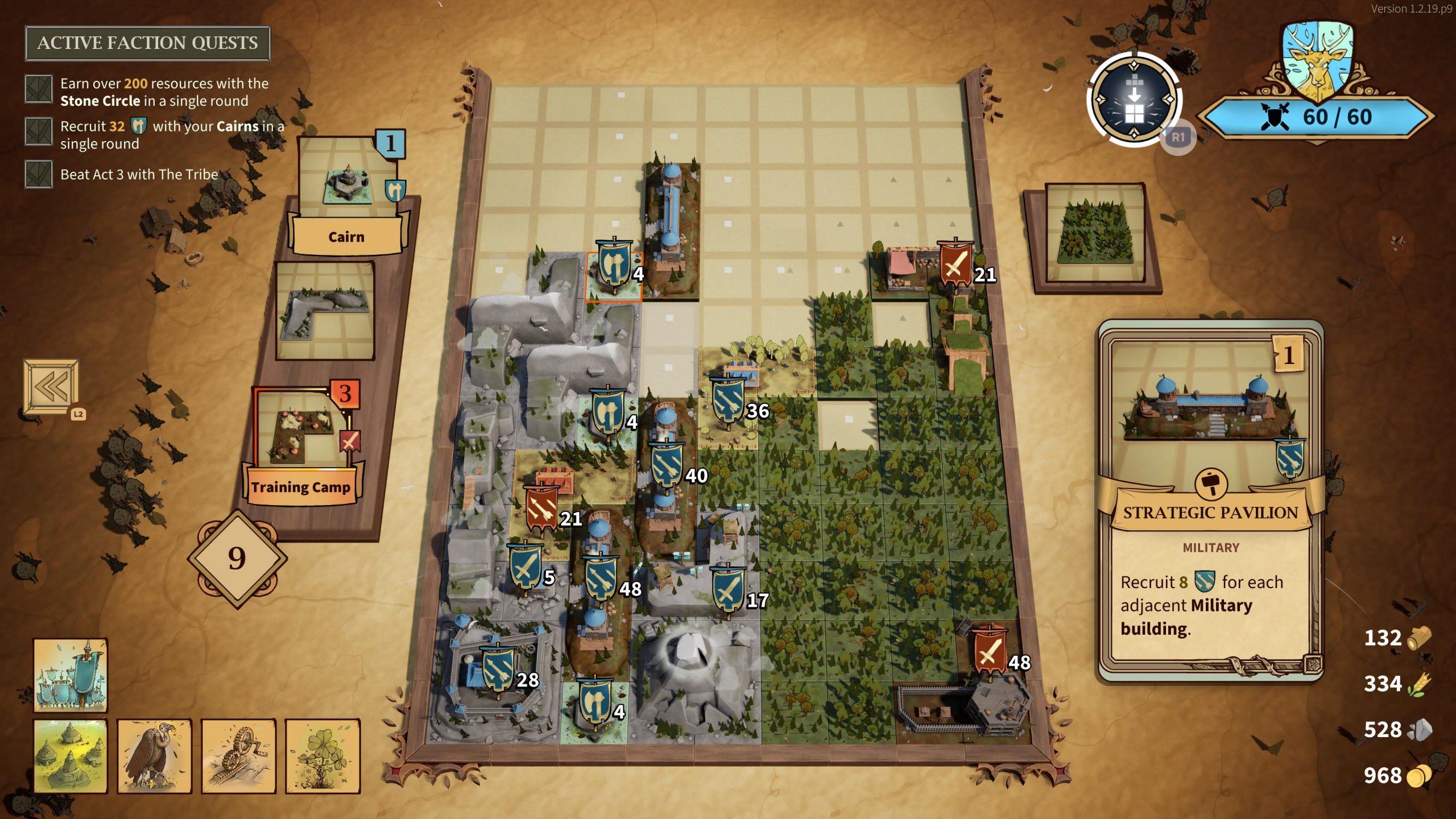
Along the way, you’ll also drop buildings. These little structures can either focus on production (as in, more resources) or can be military bases that will add to your army. In combat, you’ll also be dropping in enemy military buildings too and given that these can interact with each other or different types of terrain, managing their placement is just as important as managing your own military.
Once all the pieces are in place, the game then pits your armies against the CPU players’ ones. This section again leans into strategy and a little puzzle-solving. Your buildings will produce different types of troops. Swordsmen, archers and axe guys and these all interact in a Rock, Paper, Scissors kind of way (swords beat arrows, arrows beat axes, axes beat swords).
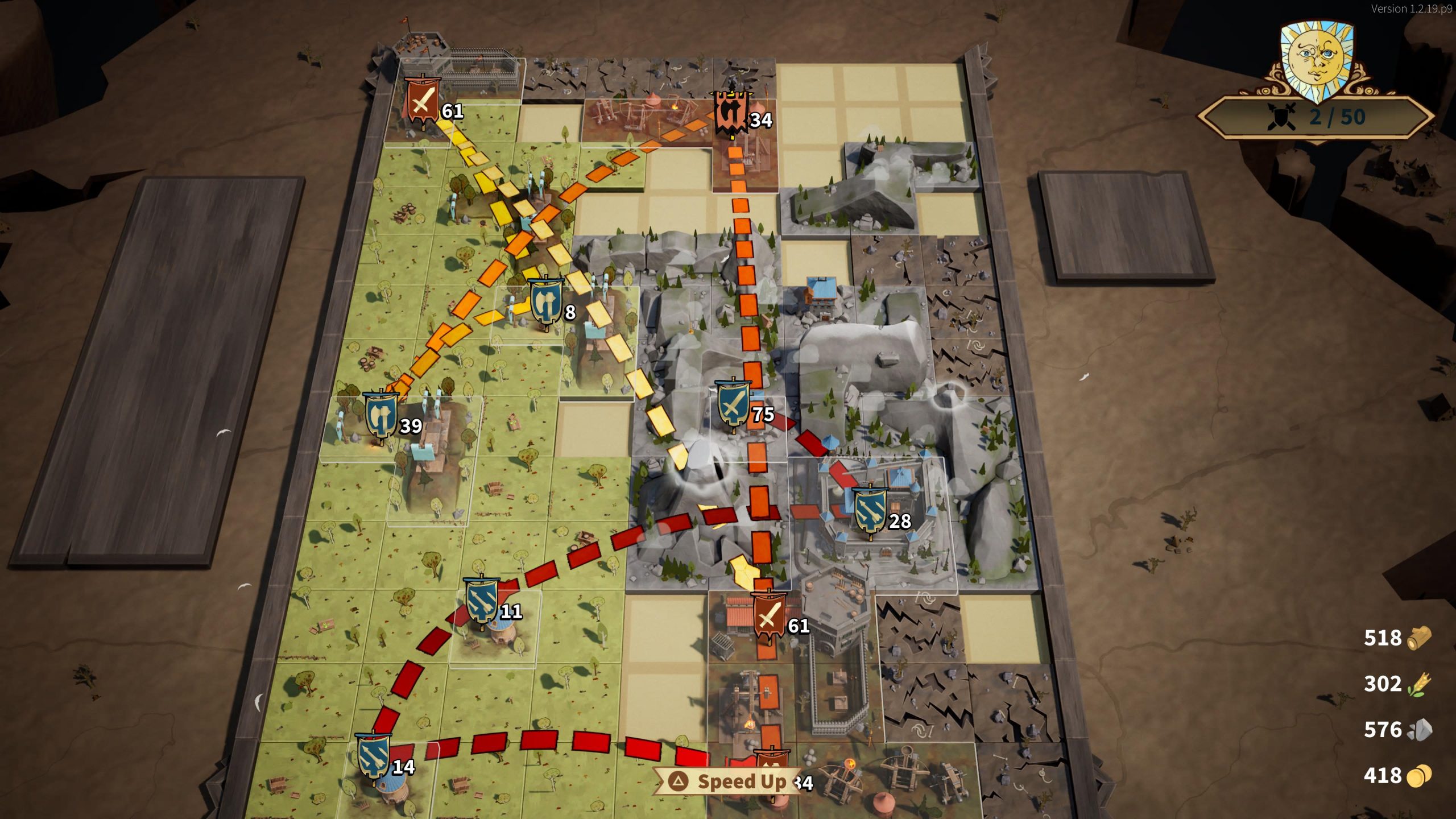
You gather up your armies, and each time they combine, the army as a whole gets converted to the larger type. So you’ll need to manage it because sometimes you just want to combine some of them, and other times you’ll need to attack an enemy unit while you’ve got the best type to do it with. It’s not as complicated as it sounds (although it did take us a while to really grasp it) and is probably the most fun part of the game.
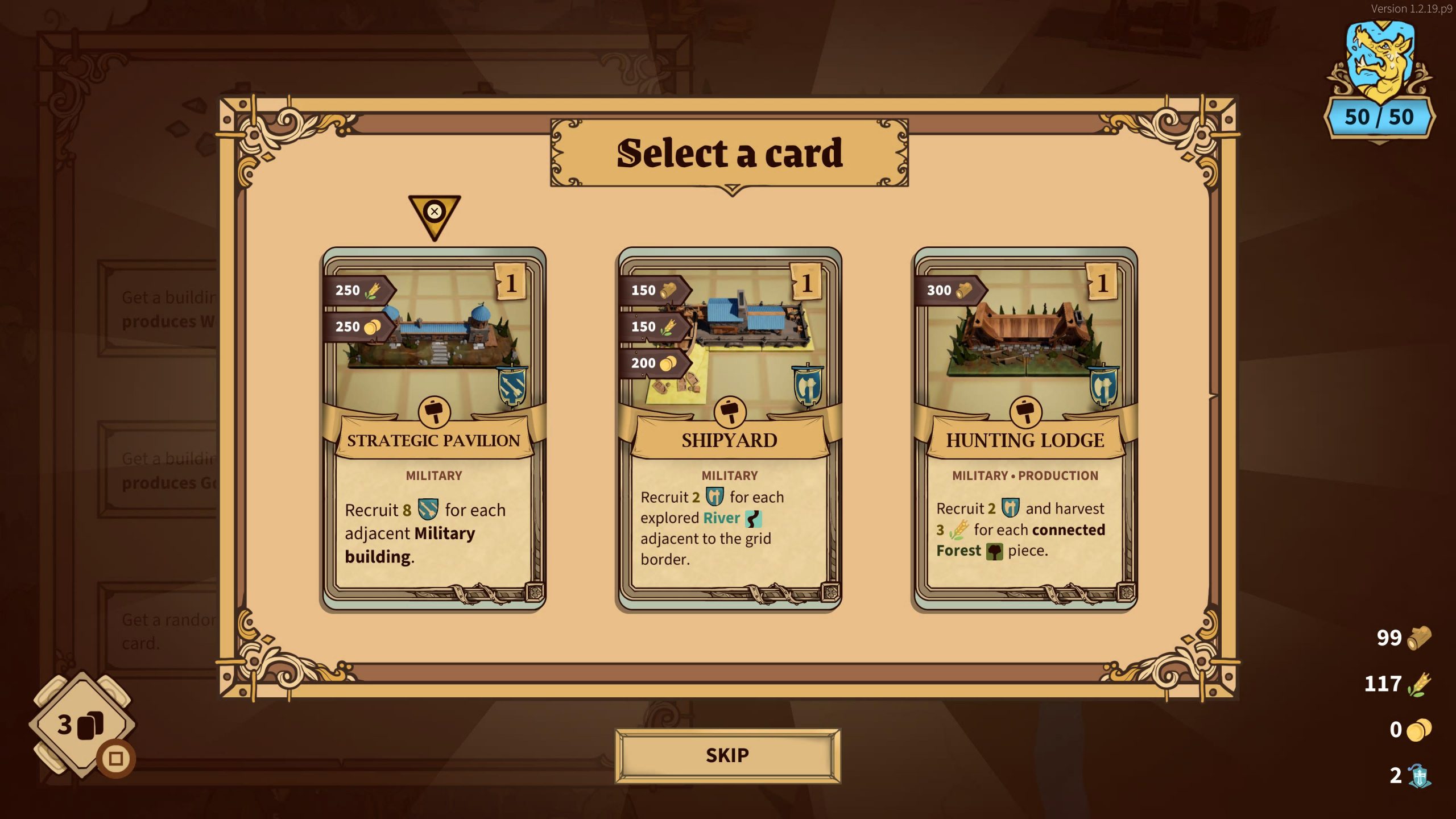
And that’s pretty much the main thrust of the game. Along the way, you’ll pick up new buildings (as cards for your deck) and passive technology cards that will improve your deck along the way, but it’s really about managing those encounters and attacking the enemy in the most efficient way.
It all comes together brilliantly. The Tetris-based battle prep, the clever combat system. It’s really good and the sort of excellent indie game design that occasionally shows up and impresses us as Vampire Survivors and Balatro did. Taking existing gameplay ideas and turning them into something new. It’s good stuff.
The downside, though, is that there’s a lot of additional stuff to learn about, and it’s never really explained in an engaging way. You’ll unlock new gameplay elements like faith, residential communities and new production/military buildings, and it all starts to feel like a bit much. You’re never really sure if they are good upgrades or not, and you end up having to do extra homework, browsing Reddit or the game’s Steam discussion forums, trying to figure out how to optimise things because the game just throws loads of it at you and doesn’t give you a good way to sort it all out.
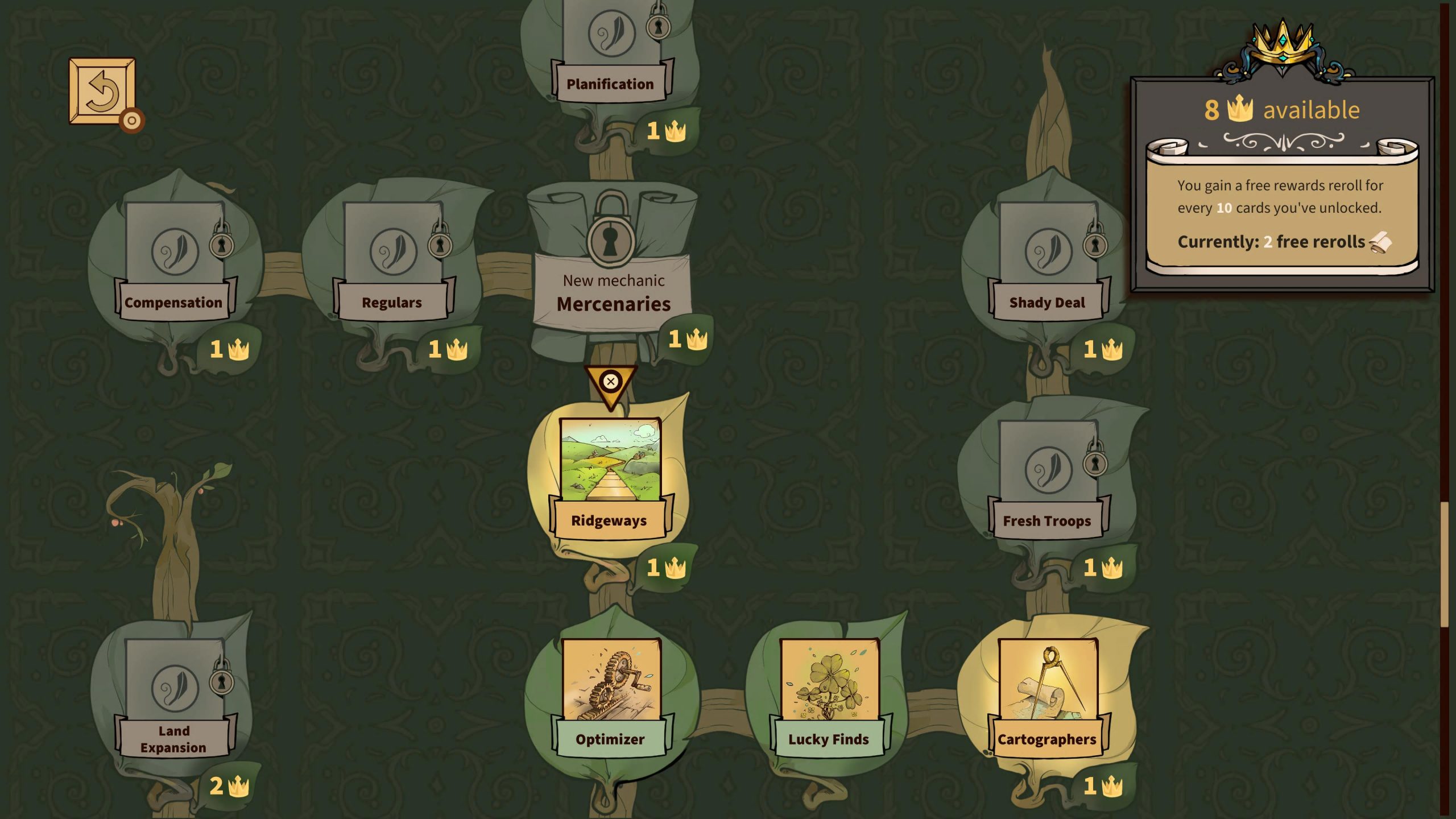
In the end, we always reverted back to our favourite units and terrain types because we knew it’d work, and it usually did. The thing is, with you having control of the enemy unit placement, it’s pretty hard to mess up a battle once you understand the rules of combat.
The presentation is nice enough with clean visuals throughout and a reasonably well-implemented menu system (even if you can tell this was made for PC first). The sound is the usual old-timey music that you’d expect, and there’s no voice acting (or characters to even voice anyway).
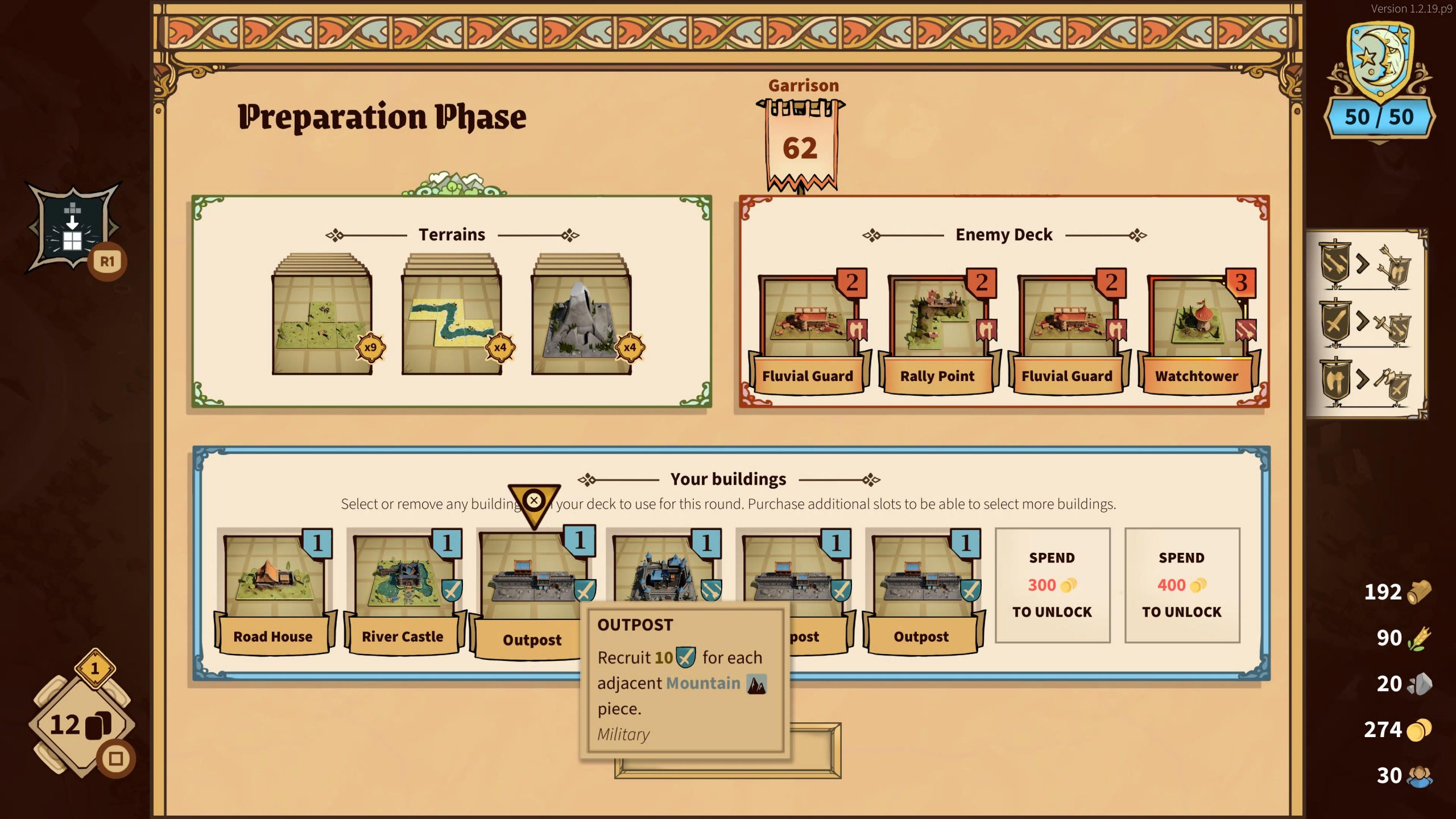
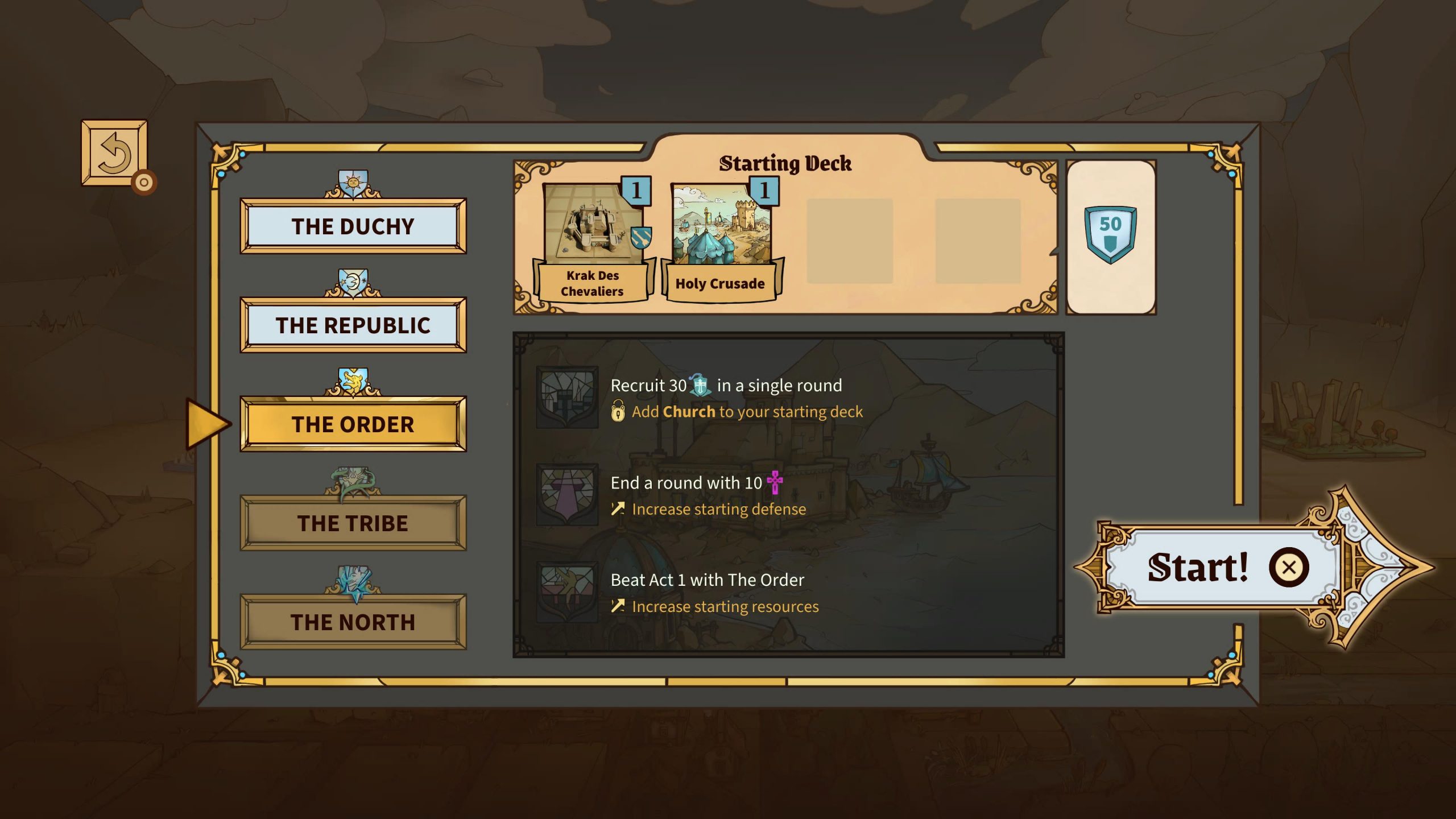
Drop Duchy’s short battles do make it a pretty good game to drop in and out of, though, and the core gameplay is actually very good. All the additional stuff with the progress tree and all of its myriad new options could be tightened up a bit and explained a little better, though, and ends up feeling like a lot of extra faff but you can have fun while just dipping into half of it.
+ Excellent mix of genres
+ Enjoyable in short bursts
- Full of extra elements that don't really improve the game
Looks alright this, I reckon one for the wishlist though.