

I’ve played a few of these precise, 3D platformers over the years. I can’t say I’ve found a truly bad one but the biggest metric for success tends to rest on the patience of the person playing. The Confinement is the latest attempt to deliver a quick-fire adrenalin rush from Mr. Dev Studio. It has the right ingredients but it in fairly small amounts. Whilst it’s got some tight controls, the overall package runs dry sooner than I’d like.
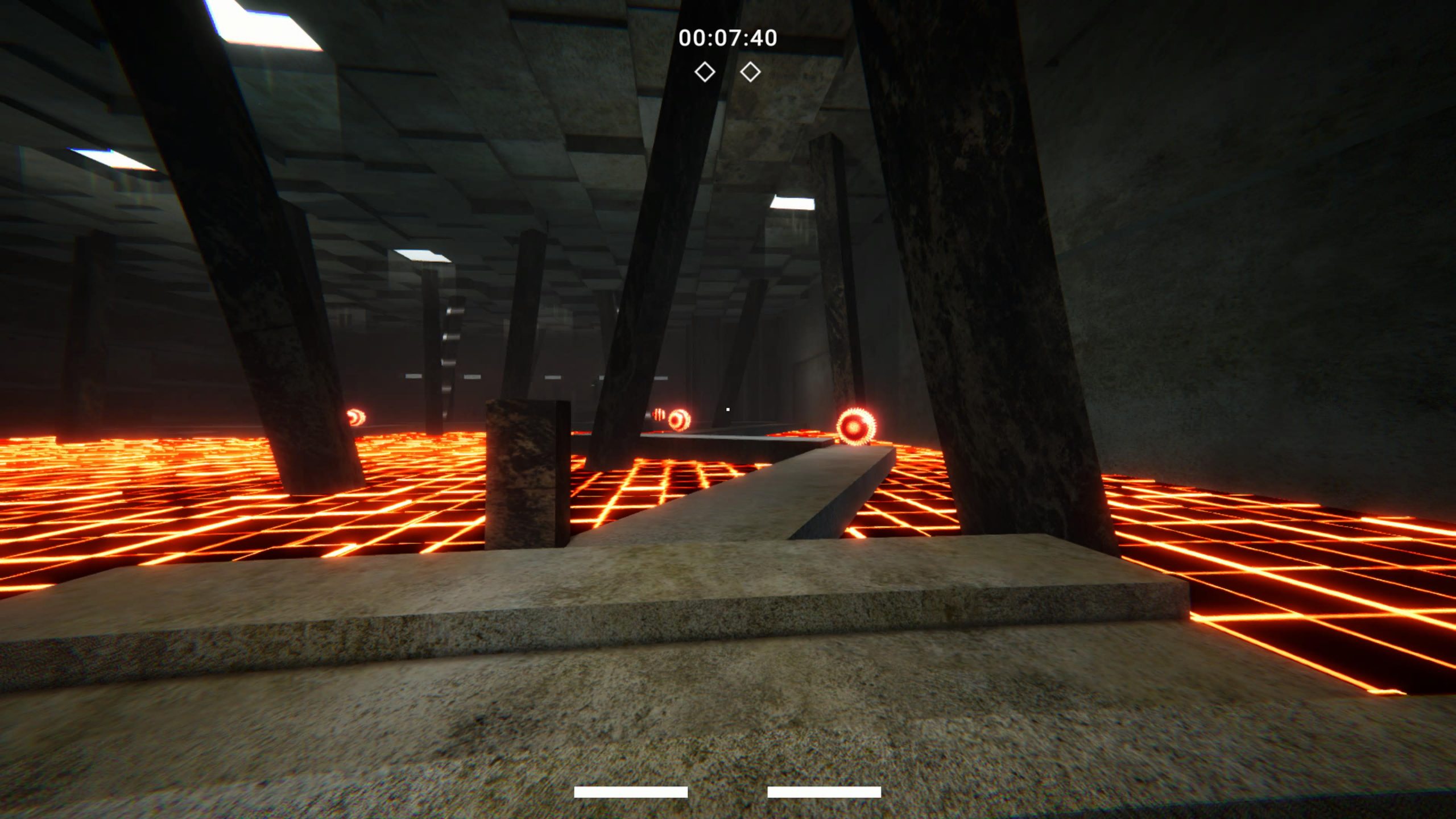 The Confinement takes place over 44 levels. The goal never changes as you look to platform and parkour your way from start to finish. The routes are typically linear, allow you to focus on your line, timing and speed through each area. Movement feels fluid and breaking into a full sprint is very easy. Jumping has a consistent arc but there’s a measure of touch you can use to tighten it up.
As you progress, you gain a dash that can be extended to three and that’s used to cross great gaps. Holding the dash button allows you to stretch them out into a single charge, although few obstacles task you with chasms that wide. The obstacles in question are very easy to read. Lasers rotate in regular intervals, blocky platforms do the same so it’s key to understand the cycles of each level.
Whilst the main goal is to simply finish, you do have collectable orbs to pursue. They offer nothing but a trophy for finding all of them, but the additional complication can influence your path through the level. Whilst they’re mostly within line of sight, there are a couple that are sneakily hidden. Success in each gauntlet unlocks the next, although you’re execution is also timed. They’re short enough to encourage repeated attempts and leaderboards give you a further white whale to chase once the three stars have been achieved.
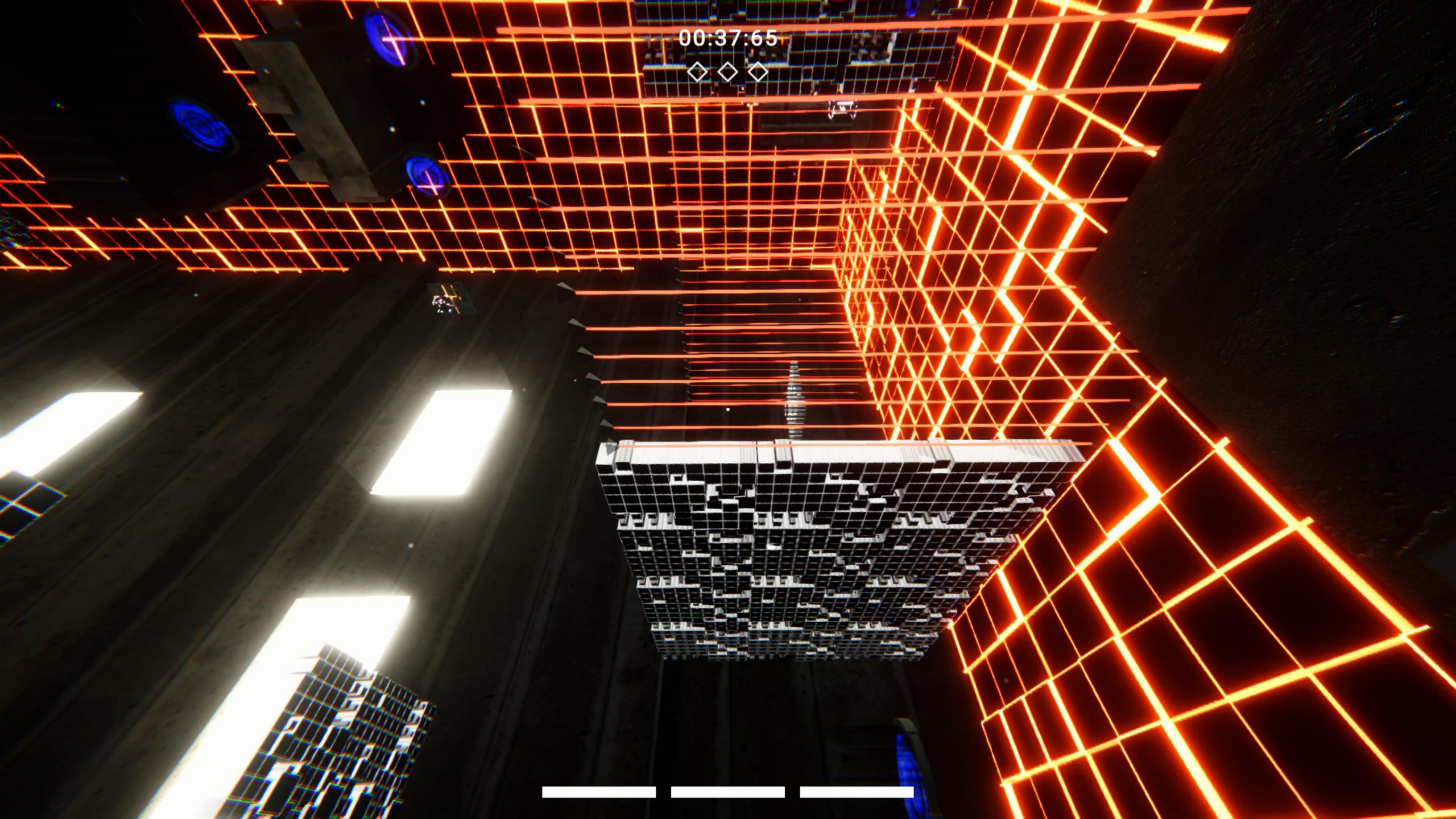 That said, The Confinement‘s selection of levels can feel small. With some taking no less than a dozen seconds to beat, a skilled player could fly through them. Even a clumsy runner like myself has seem the majority of levels within a couple of hours. The challenge is there and there’s plenty of reasons to return to old levels. It’s a cheap proposition so I can’t really nag much about the length. Just know that this can be a swift jaunt.
Whilst the controls feel responsive and accurate, the camera movement is very sensitive. I’ve turned it right down to the lowest setting and it still feels touchy. I’ve adapted to it but it took by surprise. Settling into it takes me a few runs before I truly have a handle on my viewpoint. The HUD is clean and simple. It shows how many dash charges you have available and leaves you to plot your course through each level.
Whilst there isn’t a quick restart, death will return you to the beginning of each stage. It doesn’t appear to hamper pacing and I haven’t found a level that requires a big time investment. There is a restart option in the pause menu but it quicker to self-delete. It’s a minor irritation, especially when a missed jump is involved. It’s nice to see a game solely focused on some quick, sharp execution and this omission does feel like a small misstep. I also don’t think it’s exceedingly tricky. Timing can be figured out and I do enjoy sneaking through laser grids by the skin of my teeth, or merely grazing platforms by the tips of my toes.
It has a story but it’s presented in a very minor way. You are effectively running cognitive and kinetic tests for a disembodied robot head. This program is being interfered or tampered with but that is all the intrigue it seems to deliver. These scenes are very slight and do sparsely introduce some of the new mechanics or stages. It don’t know if it ties the game together well but it’s not intrusive enough to hinder pacing.
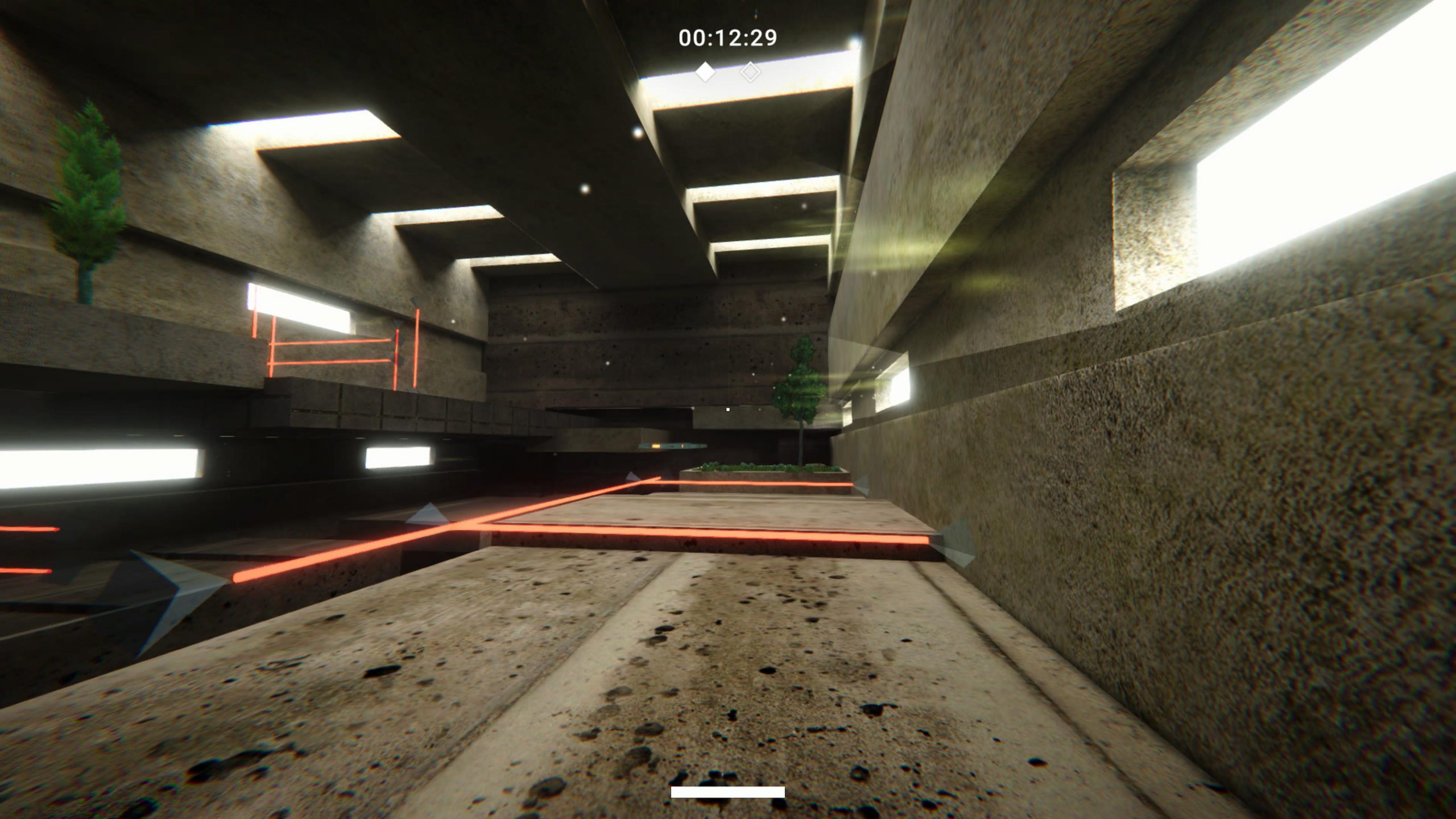 Visually, it’s very abstract with everything containing a blocky, futuristic composition. That helps make the obstacles easy to ready but the hazards also pop. Laser grids have a sharp red glow to them and the lava floors telegraph their danger in a similar manner. It has a consistent aesthetic language that really makes it easy to understand at speed. Even then, I find most levels allow for breathers. As the areas try to obscure obstacles with blocks or walls, it pays to get some reconnaissance in before truly committing to a quick effort.
It’s a small package but The Confinement does deliver a solid platforming challenge. The short nature of the levels can result in a fairly quick run to the credits and the challenge, whilst not unsurmountable, gives you plenty of room to stop and think. The trophies and collectable orbs promote repeat visits but I still would’ve liked more intrigue or variety to keep the gameplay fresh. At the very least, it doesn’t outstay it’s welcome and executes relatively well.
+ Consistent and precise controls.
+ Solid visual representation that's easy to read.
+ Introduces new mechanics regularly and level design considers them well.
- The game can be over very quickly.
- The colour palette stays the same throughout, making for something that doesn't quite feel like a journey.
- The story is very slight.