

The Fighting Force Collection is, as the name suggests, a collection of two fighting games originally released in the late 1990s and now ported to modern consoles (well, not you, Xbox; the wait continues) thanks to retro-friendly publisher Limited Run Games.
What you get here is the original, semi-legendary Fighting Force from 1997 and its less acclaimed sequel, Fighting Force 2. These are the PS1 versions, presented warts and all. The Nintendo 64 and PC versions of the first game aren’t included, nor is the Dreamcast version of the second.
But before we get into the nitty-gritty of the emulation and how these games are presented, it’s worth taking a look at each game separately.
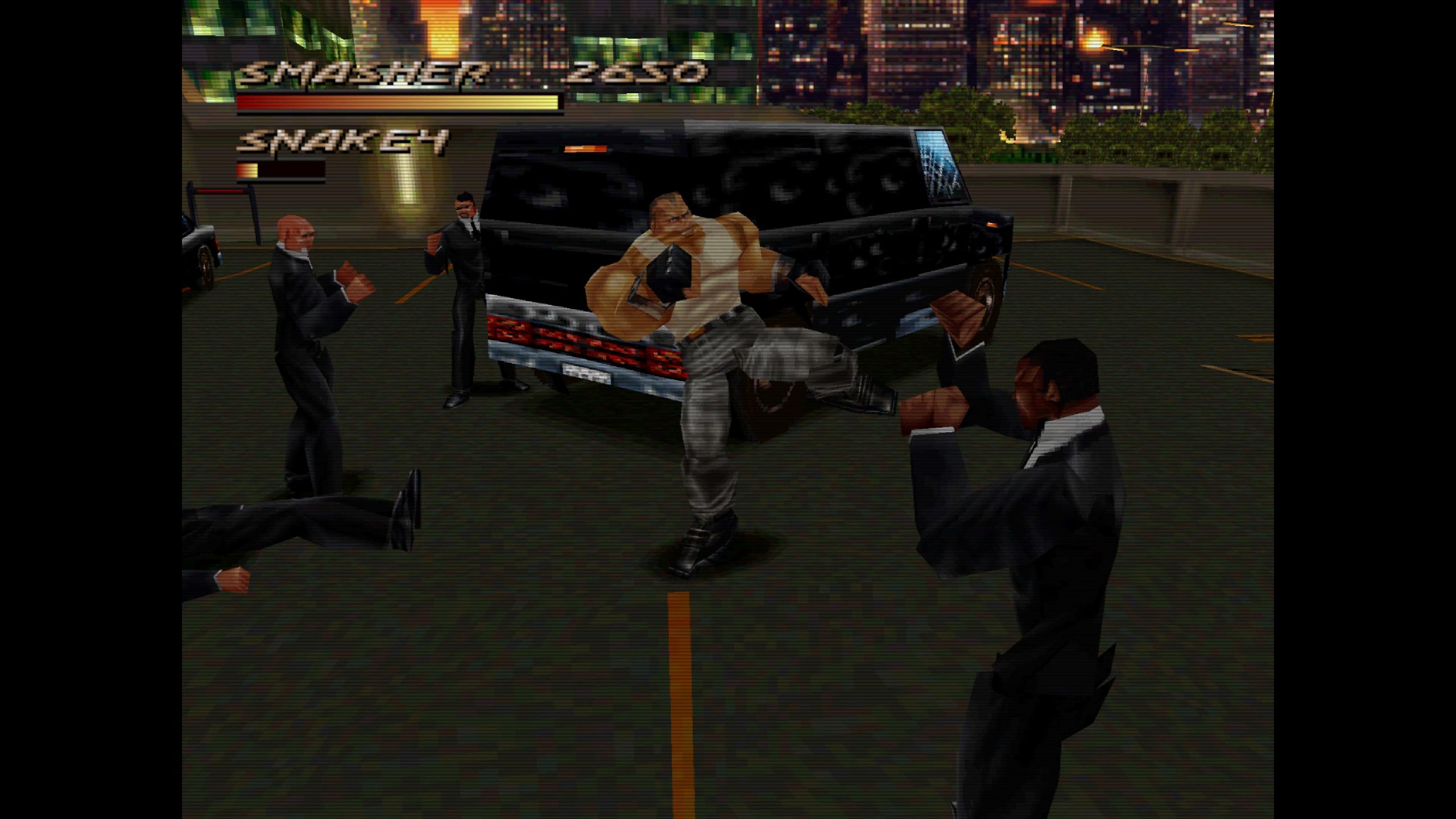
FIGHTING FORCE
When Fighting Force was first released, I was a complete mark for it. The classic beat-em-up formula, but now in exciting 3D. Although often mistaken for a 3D version of Capcom’s Final Fight, the game was originally pitched by UK studio Core Design as a sequel to Sega’s Streets of Rage series. Sega passed on it though, and it was eventually released as a standalone title by Eidos, who, along with Core Design, were riding high on the success of Tomb Raider.
The game saw you brawling your way through several urban levels – streets, parks, train stations, shopping malls and so on – on a mission to take out Dr. Dex Zeng, your standard Bond villain type who had plans to destroy the world.
In Fighting Force, you get to choose one of four characters, each with different strengths and weaknesses, and then it’s off to battle you go. From there, this really plays as you’d expect for a 3D brawler. You’ve got jumps, kicks, punches and special moves, and you need to use all of them to fight your way through Zeng’s impressive roster of henchmen and women.
What always impressed us was how interactive it all was. Playing as Ben ‘Smasher’ Jackson, the archetypal strongman bruiser type, you can destroy cars, pull out their engines and throw them at people. During the mandatory elevator section, you can rip out handrails and use them as weapons. That was always the great thing about Fighting Force: you had so many ways to beat up people.
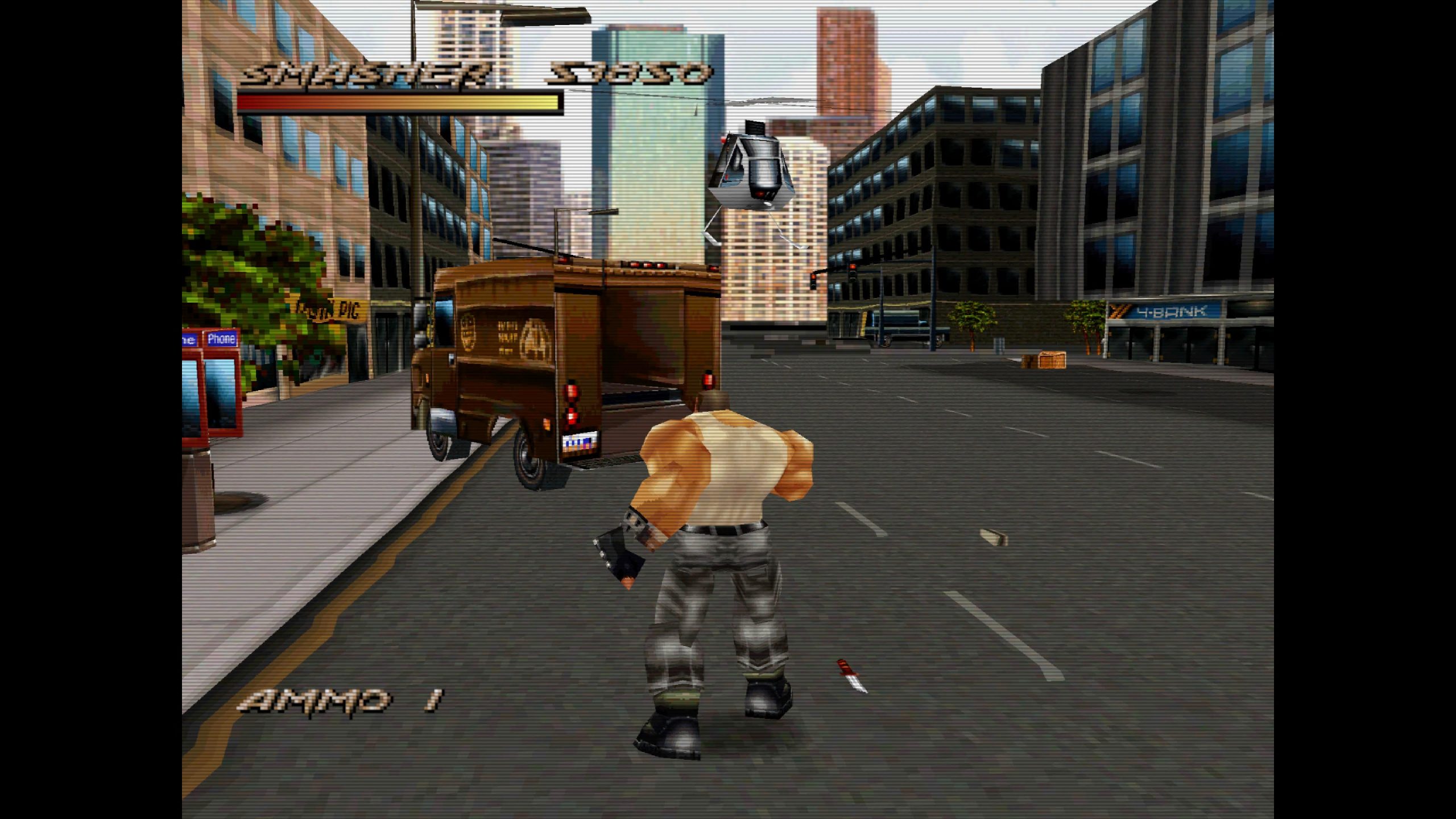
Each level is an open area where you’ve got plenty of room to move (unless you’re in one of the interior sections), and so there was a level of freedom to the game that we hadn’t seen in the usual 2D beat-em-ups that had preceded it. This was further enhanced by the clever choice to offer up branching paths, giving you plenty of reasons to replay the game when you were done with it.
And sure, even in 1997, this was an ugly game. The clunky, jagged polygons only just about carried the illusion. The blocky textures and laughable character models certainly required you to suspend your disbelief, but the varied levels and interactive nature of them made up for it.
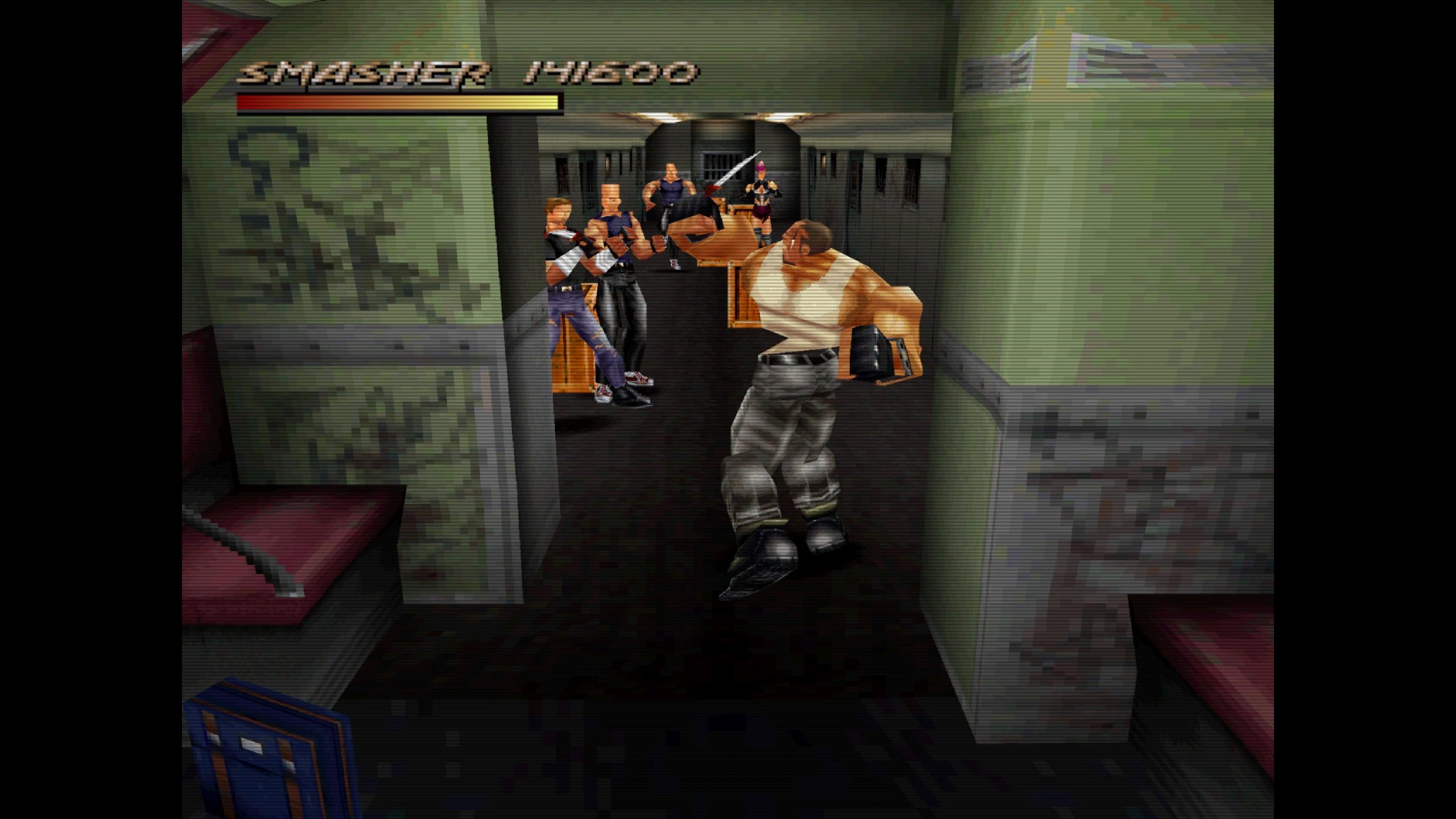
Also, the game’s camera couldn’t be adjusted (Sony hadn’t figured out the whole dual stick thing yet) and seemed to be set to ‘not helpful’ most of the time. Between that and the slightly sluggish action and controls, you had to look past some glaring faults to love the game. But love the game we did. It was a fun, interesting beat ‘em up, but taken into the next generation and it worked. Mostly.
The reviews at the time were surprisingly mediocre, with scores ranging from five to seven. For 1997, that was a bit harsh. It was a game that a lot of people remember fondly. Sure, these days that’s more of a fair scoring range but grading on a curve, Fighting Force deserved better and while those issues all persist today – the controls, the pace, the camera – the game is still playable and, surprisingly, fun.
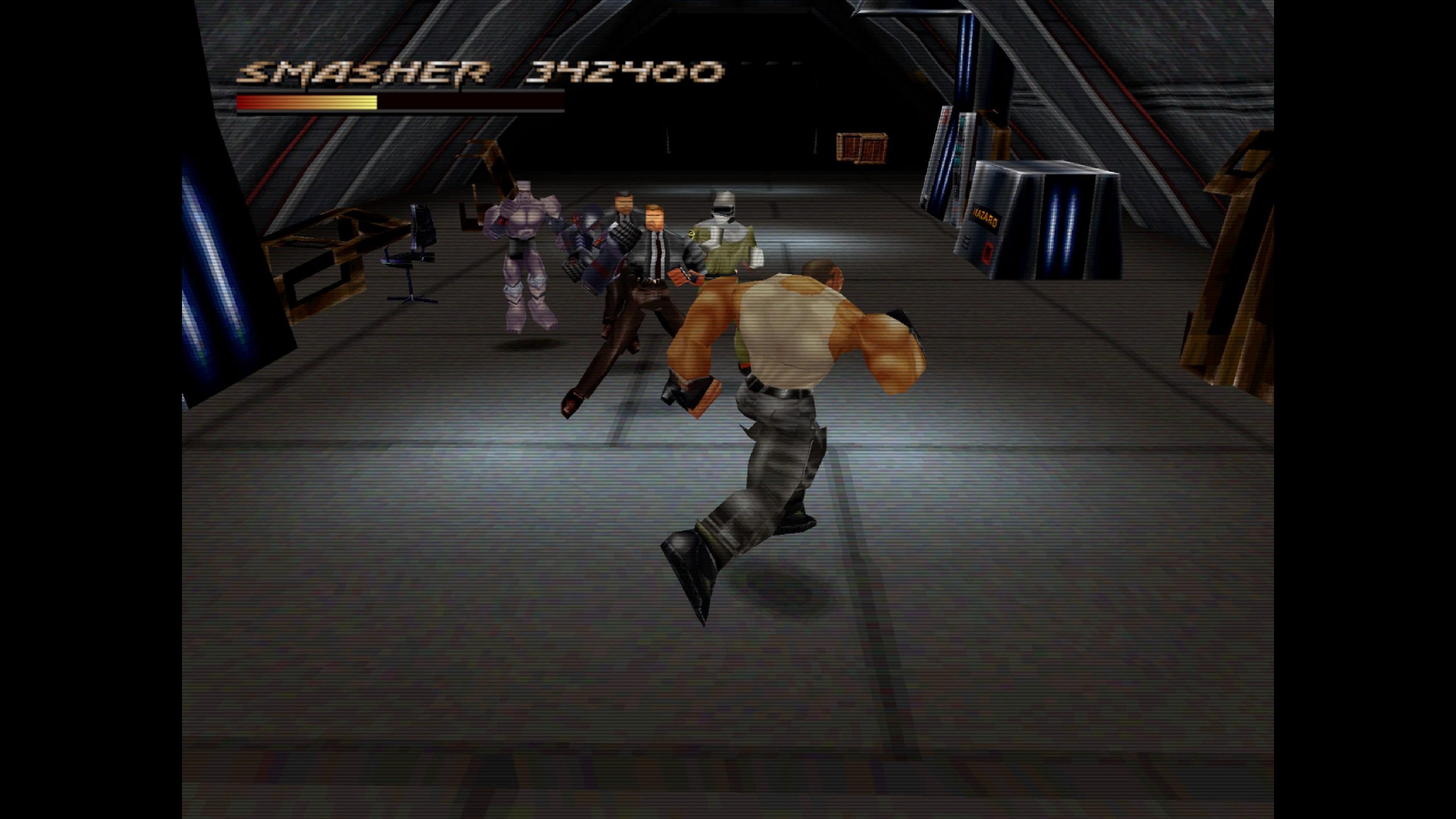
FIGHTING FORCE 2
There are plenty of criticisms to be made about the internet but, if I’d had better access to it in 1999, I wouldn’t have bought Fighting Force 2. Coming two years after the original, people were pretty hyped to see what Core Design were going to do with this sequel.
We needn’t have gotten excited. Fighting Force 2 was absolute shit. Released at Christmas on the back of a review embargo, this game conned a lot of people out of their money, us included. However, this compilation (and indeed review) gave us the opportunity to dip back into it and, more importantly, persist with it beyond the original five or ten minutes we gave it first time around.
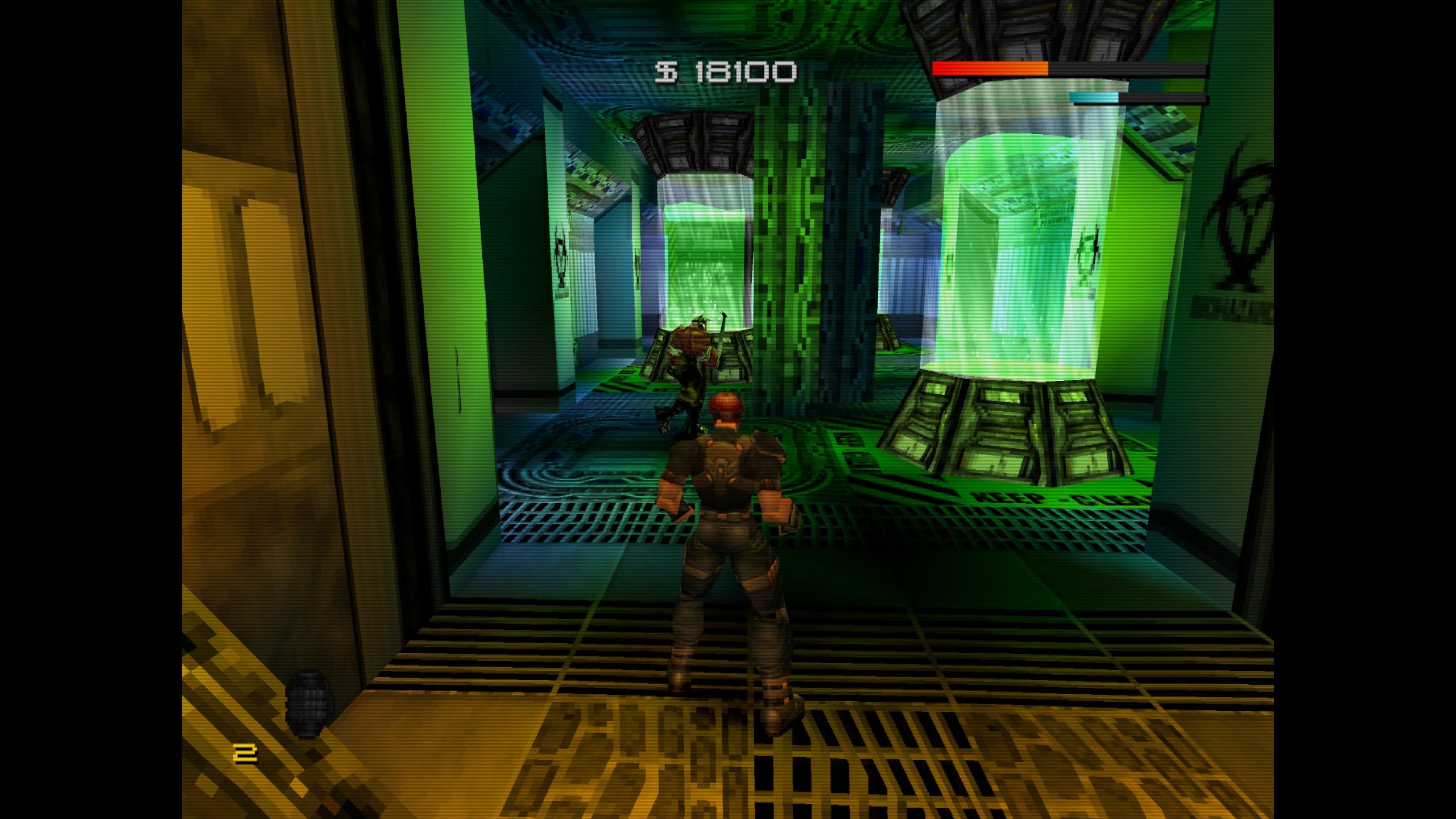
Fighting Force 2 retains only a small amount of the original’s DNA. You still run around hitting people in 3D, but aside from that, this doesn’t feel like a sequel at all. Which is odd because producer Ken Lockley and Lead Programmer Sarah Avory were both still involved. You’d think they would have known better.
Firstly, there’s no more ‘Force’ as three of the characters from the first game are no longer involved. Instead, you play as Hawk Manson as he goes it alone to take on the Knackmiche Corporation in an effort to stop their human cloning research.
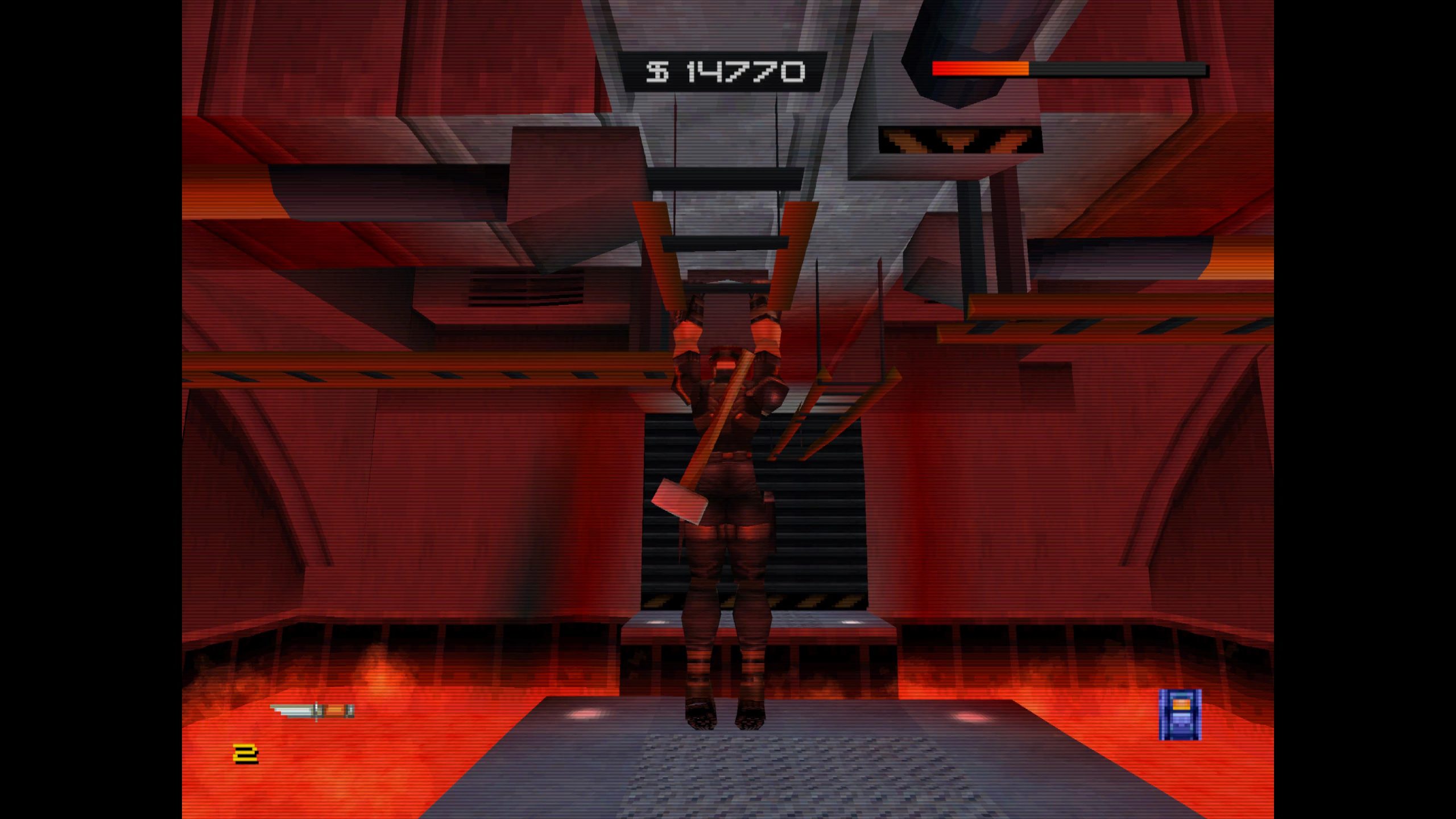
When you start playing, everything unravels. Fast. The sluggish pace of the original has been boosted, but is now awkward and fiddly. The controls are far too sensitive, making combat something of a chore. And the camera can now be manipulated, but is somehow just as bad as before.
But what really kills the game is the level design. Instead of nice open areas, everything is confined to small rooms. Essentially shrinking the game loop down to entering rooms, beating up the few guys that are there, getting a key card and leaving. It’s just that. Over and over and over. It’s less fun, it’s harder to navigate and, frankly, it’s boring in a way that the first game never was.
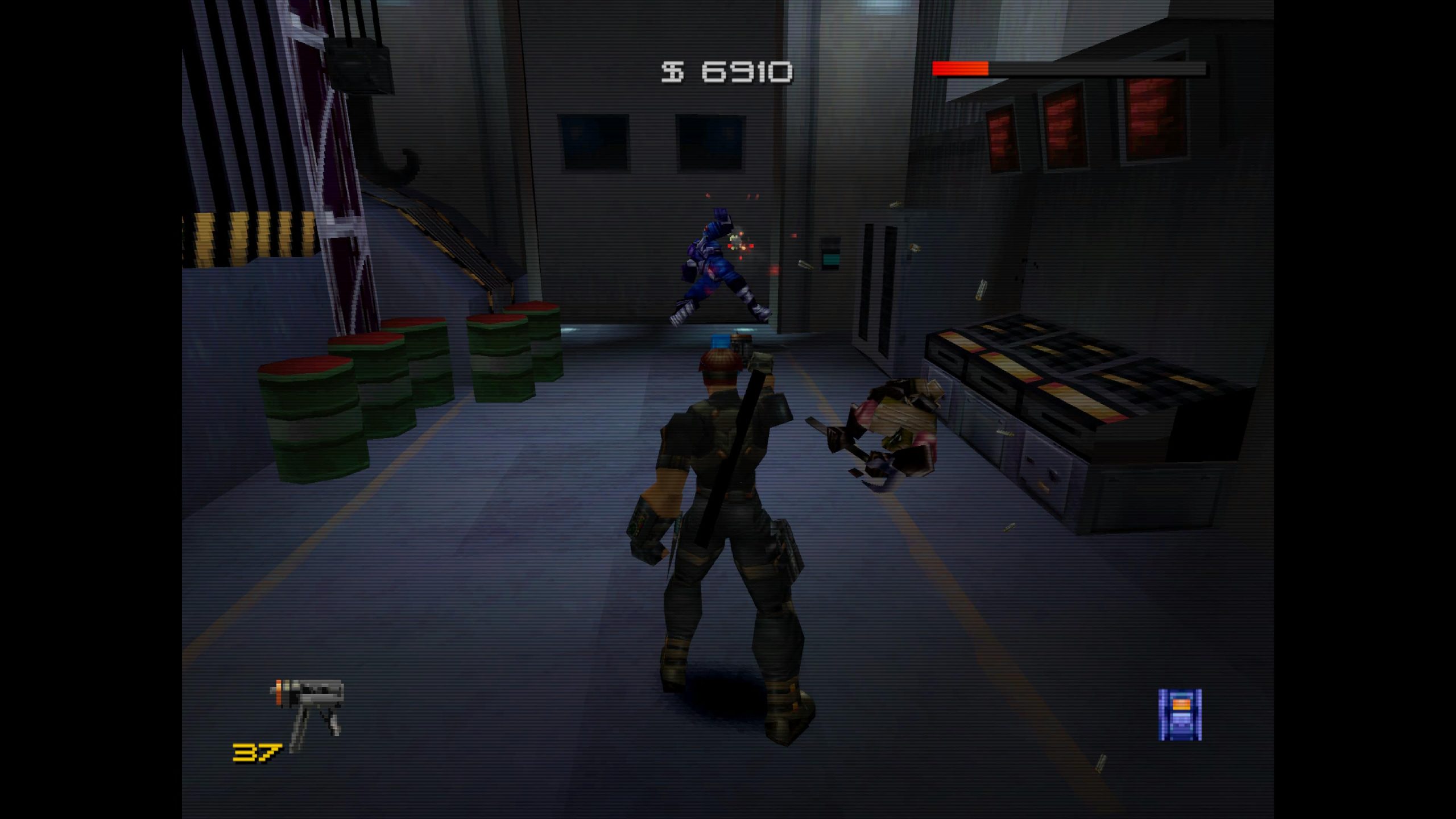
There are the occasional bits of platforming and a few switches to find, but none of it is good. Trying to navigate the world with these shitty controls is just as bleak as we remembered. However, this time around, we persisted all the way through the first building (a couple of hours of “entertainment”). But on starting the next section, the game’s already terrible controls decided to default back to their original configuration (we’d picked the slightly better third choice where jump was mapped to X), and no matter what we did, they couldn’t be altered. The sort of thing you’d pick up in playtesting but you clearly couldn’t pay people enough to bother playtesting this turd.
I couldn’t face any more of it. Those first hours were horrible, and now the game had increased the difficulty and scuppered the controls. Also, a beat ‘em up shouldn’t be four hours long.
Yep, Fighting Force 2 is still rubbish.
(FUN FACT: one of my friends used to work as a game tester for Eidos some twenty years ago and in his interview with them he said that Fighting Force 2 was his least favourite game).
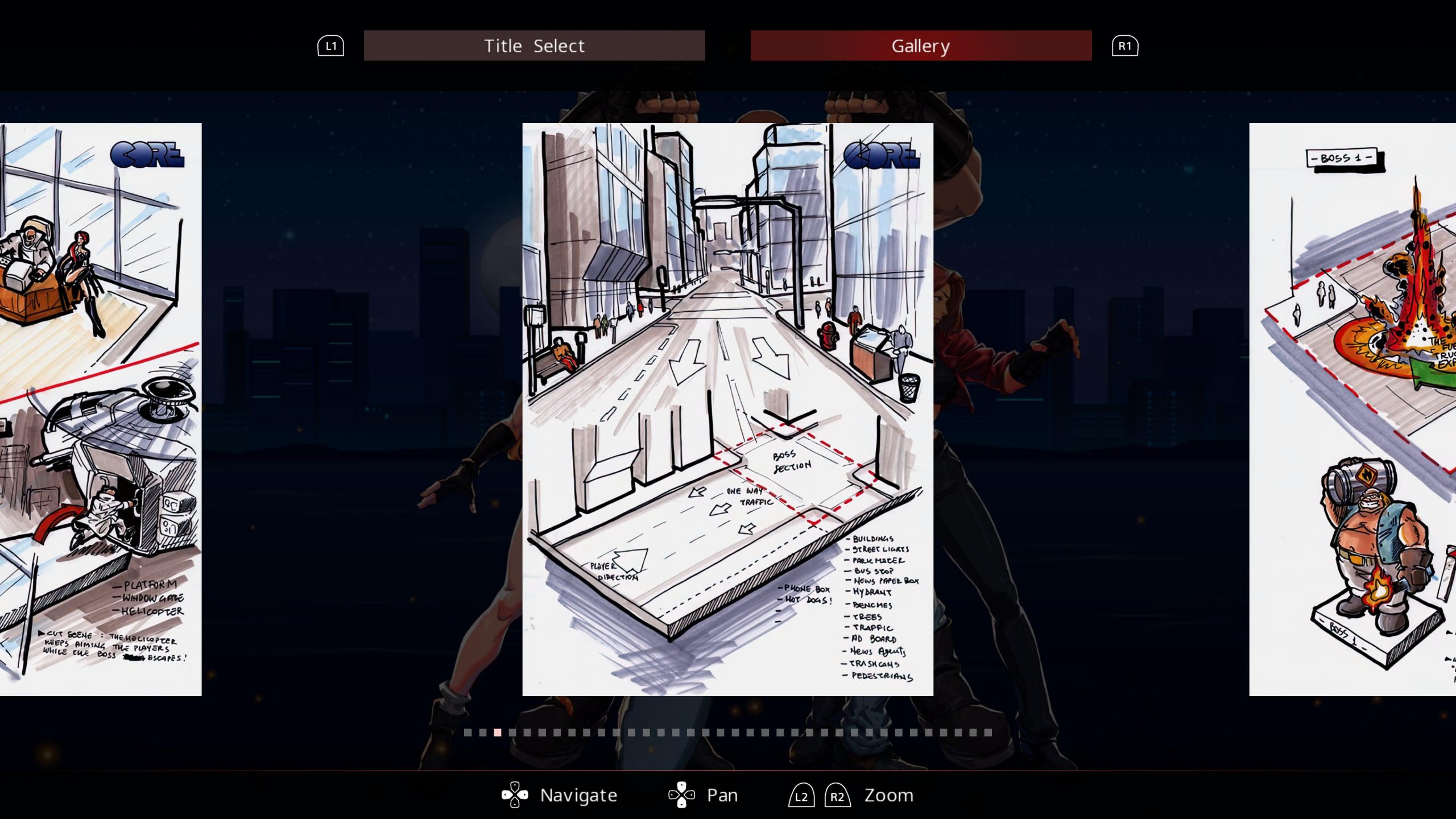
As a collection, this is pretty barebones. As we said, you only get the two PS1 games. We’re not sure we actually want to play the Dreamcast version of the sequel but if you’re doing a collection, why not go all in? Throw in the hacked-but-playable Saturn demo for Fighting Force 2. Make it interesting.
Indeed, aside from a little bit of concept art, really this is just the same as any number of PS1 ports on PSN. You’ve got the same rewind and quick save interface and a small choice of screen filter options which by default give the game a faux-CRT look. There is a degree of upscaling to the visuals but both games still look as ugly as they did in 1997.
And for £15, we’re not too sure about this one. Playing through Fighting Force again was actually pretty good fun, and we’re pretty sure we bought that back on the PSP or something years ago, so it seems a bit unfair that those privileges haven’t carried over to a standalone port (or just put it on PS Premium).
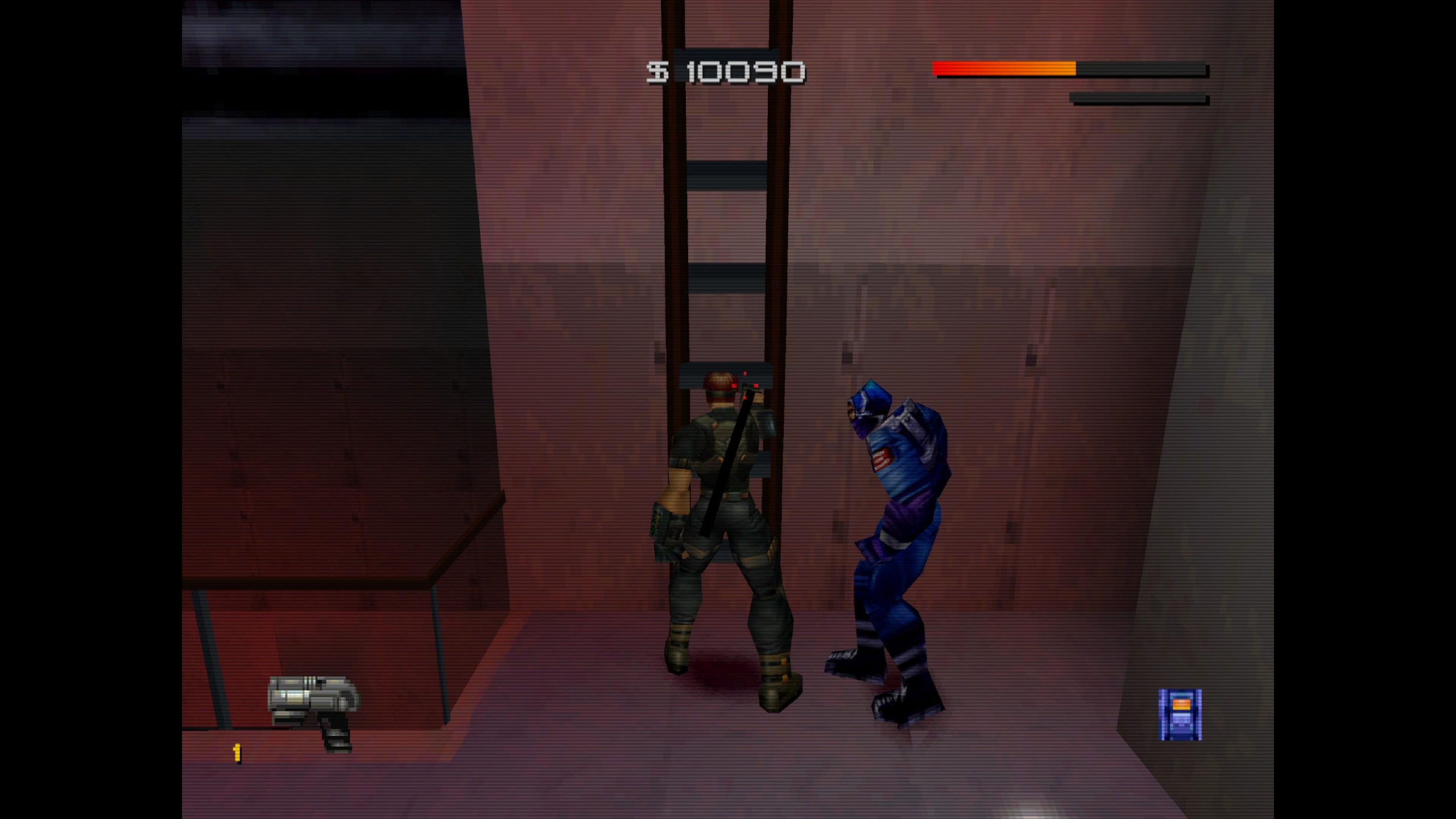
It seems as though you’re paying extra just to have Fighting Force 2 and, well, that’s just wrong on every level. It’s a terrible game that should have stayed buried. It has no merit. There’s nothing to it that games like Metal Gear Solid and Syphon Filter didn’t do much better.
For this sort of money, there needed to be more to this collection. More visual filters, more games included, some behind-the-scenes content. Wouldn’t it be fun to get the real story behind why Fighting Force 2 sucked so badly?
Instead, what you’re paying for is just the core Fighting Force original game experience. And while it’s fun, it’d be easier to appreciate at, say, a fiver. Fighting Force 2 adds nothing. It just releases all those horrible memories of playing it the first time around.